

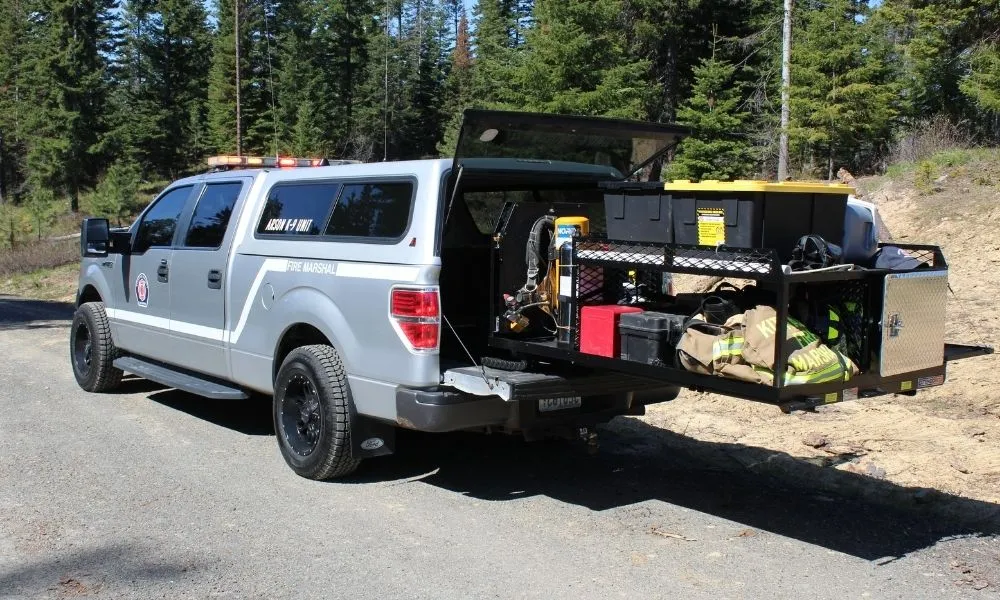
Extended truck bed solutions help fleets load and unload heavy equipment without sending crews into the bed. For fleet managers, that access shapes how quickly a crew works and how safely it gets home. It also decides whether a truck earns its keep over a long service life.
Heavy loads raise the stakes on every pull and every lift. A generator, compressor, or rescue tool can weigh hundreds of pounds, and reaching for it strains the body. This guide walks through what a well-built extension system should do and how to plan one around your fleet.
What an Extended Truck Bed Really Means for Fleets
An extended truck bed, in practical terms, is one where the cargo floor travels out to meet the operator. Instead of crawling in after gear, crews pull the load toward them at the tailgate. Many buyers start by searching for a truck bed extender, but a full slideout does more than add length.
At Extendobed, it all starts with the base slideout, the foundation platform that rolls out of the bed. It can stand on its own, and some fleets run it exactly that way. Everything built on top of it forms the carrier. A tray is one carrier option, alongside drawers, shelves, mounting walls, whiteboards, and day boxes. Each base slideout comes custom-sized to fit almost any pickup, van, SUV, service body, or trailer.
This distinction matters when you plan for heavy equipment. The base slideout carries the weight, and the carrier keeps it organized. Getting both right turns an ordinary pickup into a dependable work platform.
Why Extension Length Matters With Heavy Equipment
Extension length decides how much of the load your crew can actually reach. Many slideouts stop short, leaving the front of the platform tucked inside the bed. Extendobed units extend to 110%, and sometimes even further. The platform travels past the taillights, putting every item within arm’s reach.
On an extended truck bed carrying heavy equipment, that last stretch of travel matters most. The heaviest items often ride near the cab, right where short-travel systems leave them stranded. Full access means operators lift straight up instead of bending and reaching across the deck. OSHA’s ergonomics guidance treats awkward postures as a risk factor worth reducing.
Picture a utility crew pulling a 300-lb generator at the end of a long shift. With partial extension, someone climbs in or drags it the last few feet. With full extension, it sits right past the tailgate, ready to lift.
Load Capacity and Weight Distribution Freedom
Heavy equipment hauling puts a premium on rated capacity. Extendobed builds units with load limits from 1,000 to 3,000 lbs, matched to the application. Crews can load by hand or set gear on the platform with a forklift. Its industrial configurations pair that capacity with carriers built for rough daily jobsite use.
Another key detail is weight distribution. Many systems ask operators to spread the load evenly across the platform. Extendobed has no even-weight-distribution requirement, so a heavy generator can sit where it makes sense. For an extended truck bed working in the field, that freedom simplifies daily loading.
Capacity also depends on what sits underneath. Extendobed builds for repeated heavy cycles, not occasional weekend use. That robustness keeps the platform pulling smoothly long after lighter systems start to wear.
Planning an Extended Truck Bed Around Your Equipment
Good planning starts with the gear itself, not the truck. Before requesting a quote, list what each vehicle carries and how often crews reach for it. A few questions help shape a smart extended truck bed design:
- What is the heaviest single item, and where does it need to sit?
- Which tools need fast access, and which can live in drawers or on shelves?
- Does the crew load by hand, by forklift, or both?
- Will the vehicle need powered extension for very heavy or frequent pulls?
Clear answers let the design team match the base slideout and carrier to real work. They also make it easier to standardize builds across a fleet, which simplifies training. Commercial fleets should also check the FMCSA cargo securement rules when planning tie-down points on the carrier.
Safety and Long-Term Value for Fleet Operations
Safety is where full extension pays off most. Operators stay on the ground, standing upright, with the load in front of them. Extendobed’s heavy-duty construction also guards against product failure under load. For the heaviest loads, the Power Drive system extends and retracts the platform at the push of a button.
Safety officers tend to notice the difference quickly. Fewer awkward lifts can mean fewer strain injuries and fewer lost workdays.
Value shows up over years, not months. Extendobed has built truck bed slideouts since 1987, when it designed and patented the first one. Its units often outlast the trucks they ride in, which stretches the return on each purchase. It is a premium product with a premium price, and that durability is a big part of why. An extended truck bed that lasts that long turns an upfront cost into a lasting fleet asset.
Building a Smarter Hauling Setup
The right extended truck bed brings heavy equipment to your crew instead of the other way around. It starts with a custom base slideout and grows with whatever carrier your work demands. Get those pieces right, and you gain safer lifts, faster turnarounds, and gear that stays organized.
Extendobed has spent decades building these systems for fire, law enforcement, military, and industrial fleets. Every build is custom, and the relationship continues long after installation with real follow-up service. Ready to plan around your heaviest gear? Connect with the Extendobed team, and let’s sketch out a build together.