

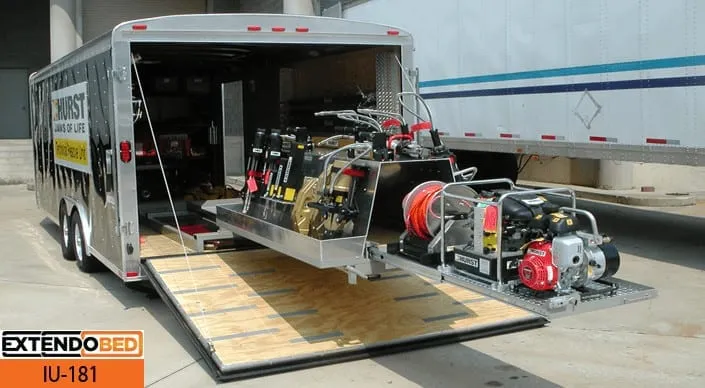
Sliding bed for truck installations change how commercial crews reach the gear they rely on every day. Instead of climbing into the bed or stretching across it, operators pull the load out to them. For fleets running long shifts and heavy equipment, that simple change adds up fast.
This guide walks through what these systems include and how they fit different industries. It also covers what fleet managers should weigh before standardizing one build across many vehicles.
What a Sliding Bed for Truck Fleets Actually Includes
A sliding bed for truck fleets has two parts that work together. The base slideout is the foundation product. It mounts in the bed and rolls out on heavy-duty rails, carrying whatever sits on top. Some crews run the base slideout on its own, which works well for bulky or palletized loads. It is a durable platform that can stay simple or grow with your needs.
The carrier is anything built on top of the base. Trays, drawers, shelves, mounting walls, whiteboards, and day boxes are all carrier options, used alone or combined. A tray, in other words, is one carrier choice rather than another name for the whole system. Extendobed sizes each base slideout to the vehicle, and its base slideout configurations cover pickups, vans, SUVs, service bodies, and trailers.
Why Commercial Fleets Are Rethinking Truck Bed Access
Every climb into a truck bed carries risk. Slips, awkward reaches, and repeated bending wear crews down over a long career. Those strains also drive injury claims, lost workdays, and turnover. OSHA’s ergonomics guidance identifies awkward postures and heavy lifting as common contributors to musculoskeletal disorders.
A sliding bed for truck applications brings the load to waist height at the tailgate. Operators stay on solid ground and lift with better posture. Safety officers often rank this among the most practical upgrades available. It protects people without adding steps to the job.
There is a cost side, too. Fewer strain injuries mean fewer claims and steadier staffing across the fleet. For public agencies and private operators alike, that predictability helps budgets hold.
How Full Extension Changes the Workday
Extension length matters more than many buyers expect. Many slideouts stop short, leaving the front of the load buried inside the bed. Extendobed units reach 110% extension, and sometimes more. The platform travels past the taillights, so crews reach every item without leaning in.
Loading is just as forgiving. Extendobed does not require even weight distribution, so heavy gear can sit wherever the job demands. That freedom matters for generators, pumps, and compressors that rarely balance neatly. It also means a sliding bed for truck work can carry mixed loads without constant rearranging.
For the heaviest setups, a push-button Power Drive system extends and retracts the platform without manual pulling. Crews save effort, and the risk of strain drops even further. It is a practical option for fire, utility, and industrial crews who move heavy loads all day.
Matching a Sliding Bed for Truck Builds to Your Industry
A sliding bed for truck work should reflect the gear your crews actually carry. Here is how several common fleet types tend to configure their systems:
- Utility and telecom crews: Drawers and shelves keep meters, splicing kits, and hand tools sorted by task.
- Oil and gas field teams: A heavy-duty base slideout handles generators and pumps, often paired with day boxes.
- Construction and industrial contractors: Mounting walls and trays hold power tools, cords, and consumables in fixed spots.
- Service body fleets: Slideouts built for service bodies add deep, reachable storage behind the side compartments.
Because every unit is custom, the carrier follows your workflow instead of forcing crews to adapt. That consistency also makes training easier when drivers rotate between vehicles. It also keeps each tool in a predictable spot, which shortens searches during busy shifts.
Durability, Lifecycle Cost, and Fleet ROI
Upfront price only tells part of the story. Extendobed built and patented the first truck bed slideout in 1987 and has refined the design ever since. Units carry load ratings from 1,000 to 3,000 lbs, so the platform matches the job. Many of them outlast the trucks they ride in, which stretches the value across years of service.
A sliding bed for truck fleets is a premium investment, and it carries a premium price tag. The return shows up in fewer injuries, faster load-outs, and less downtime. Fleet managers can also standardize one proven design across dozens of vehicles. Extendobed stands behind that investment with a clear product warranty and ongoing support.
Lead time deserves a place in the conversation as well. Custom builds take planning, so it pays to start talks with the manufacturer early in your budget cycle. An early start gives room to refine the carrier layout before vehicles arrive.
Building a System Around Your Crew
The right sliding bed for truck applications starts with an honest look at how your crews work. Consider what they carry, how often they reach for it, and where strain shows up. Involve the operators too, since they know where the daily friction lives. From there, the base slideout and carrier can take shape around real tasks.
Extendobed has spent nearly four decades building these systems for commercial, industrial, and public safety fleets. The team treats each order as the start of a relationship, with follow-up service long after installation. If your fleet is weighing an upgrade, reach out to the Extendobed team. Together you can map out a build that fits your vehicles and your people.