

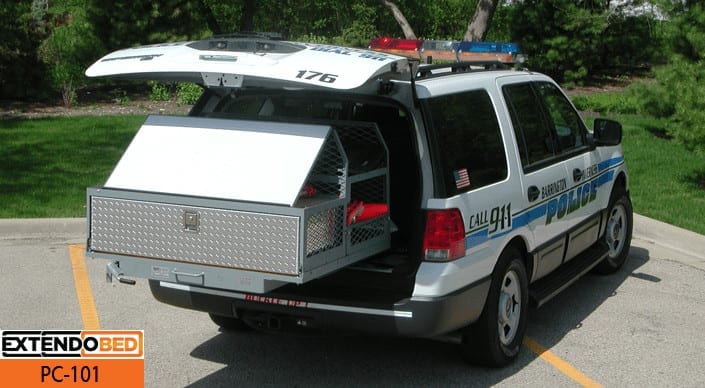
Not every fire slide-out is built for the same job. Some departments need a unit that puts extrication tools and medical gear within arm’s reach the second they arrive on scene. Others want a mobile workspace that keeps radios, laptops, and incident command boards organized for hours-long operations.
The difference between a first-response slide-out and a fire command-center slide-out comes down to mission. Get the match right, and your crew works faster with fewer fumbles. Get it wrong, and you end up with a system that either has too many features slowing you down or not enough to keep a complex scene running.
First-response slide-outs are designed for speed. The crew pulls up, extends the tray, and grabs what they need, which can be anything from medical bags, self-contained breathing apparatuses (SCBA), extrication tools, and hand tools. Everything is positioned for fast deployment with minimal steps between the truck and the scene.
Command-center units serve a different purpose. They turn a pickup bed or SUV cargo area into a working command post. Radios, laptops, chargers, documentation kits, and incident boards all have designated spots. The goal is sustained coordination, not a 30-second grab.
Rapid intervention and on-scene coordination are not interchangeable. When these two missions are treated the same, problems follow. A first-response crew outfitted with a command-center layout wastes time working around features they don’t need. A battalion chief trying to run incident command from a bare rescue tray must improvise with loose gear and no workspace. Matching the unit type to the actual mission is where effective outfitting starts.
How equipment is organized on the slide-out platform directly affects how fast your team operates. First-response layouts front-load the most critical items. The gear you reach for at the outset sits closest to the tailgate, visible and unobstructed the moment the tray extends.
Command-center layouts work differently. They prioritize categorized storage and workspace integration. Radios go in one section, electronics in another, paperwork and reference materials in a third. The emphasis is on keeping a complex set of tools organized over a longer period, not on shaving seconds off a single retrieval.
Typical equipment priorities by unit type:
Layout shapes retrieval time and decision-making speed. A well-organized first-response unit gets tools into hands without hesitation. Meanwhile, a well-organized command-center unit keeps the incident commander focused on the operation instead of searching for a radio or a pen.
First-response units keep it simple. Fold-down gates allow fast access from the side or rear. Containment cages prevent gear from shifting during rapid transit. Open or semi-open configurations let crew members grab what they need without unlatching doors or opening drawers.
Command-center units carry more built-in features. Dry-erase boards and map boards provide planning surfaces. Bookcase-style enclosures store binders, reference materials, and electronics. Integrated workspaces give multiple people room to operate simultaneously from the truck bed.
The trade-off is straightforward. Every added feature increases the capability for extended operations, but it also adds complexity and weight. For a crew that must pull a backboard and extrication tools in under a minute, a dry-erase board and a bookcase are impediments. For a battalion chief managing a multi-agency incident, those same features are what make the truck useful.
Need help choosing between a first-response or command-center configuration? Contact Extendobed to talk through your department’s operational priorities and build a slide-out that fits.
Extendobed’s standard fire slide-outs support up to 3,000 pounds, which gives departments serious room to load heavy gear. But capacity alone doesn’t tell the full story. How you fill that space matters.
First-response equipment tends to be bulky. Extrication tools, hose packs, and SCBA rigs take up physical room and add weight quickly. These units benefit from open-platform layouts with tie-downs and containment caging that maximize the available deck space.
Command-center equipment is often smaller but more varied. Radios, laptops, chargers, and documentation don’t weigh as much individually, but they need compartments, drawers, and shelving to stay organized. Built-in structures like shelving and electronics racks eat into usable bed space.
Departments should also consider vehicle weight distribution. A fully loaded command-center unit with planning boards, electronics mounts, and drawers adds more fixed weight to the slide-out than an open rescue tray loaded with removable gear. That difference can affect vehicle handling, especially on pickups with shorter wheelbases.
Departments change. Budgets shift. Call volumes increase. The slide-out installed today still needs to work for your department in three to five years.
Modular configurations make that goal possible. A department starting with a first-response slide-out can add drawers, electronics mounts, or board slots later, without replacing the entire unit. Extendobed builds systems that accept add-on components, so upgrading from a basic rescue tray to a hybrid or command-focused unit doesn’t mean starting from scratch.
Common upgrade paths include adding partitions for better gear separation, mounting dry-erase or map boards to an existing frame, installing locking drawers for sensitive equipment, and integrating electronics trays for radios and laptops.
The goal is a system that grows with the department’s needs. Buying a unit that requires a full replacement every two or three years isn’t a budget-friendly strategy. Purchasing one that accepts new components over time is.
For first-response crews, everything boils down to time-to-tool. During the first few minutes after arrival, having medical gear and extrication tools positioned for instant access can directly affect outcomes. A properly configured first-response slide-out comparison shows that front-loaded layouts with open access consistently reduce retrieval time as compared to enclosed cabinet-style systems.
For command-center operations, efficiency looks different. A prolonged incident, multi-agency response, or complex fire scene requires sustained coordination. Command-center slide-outs improve that coordination by giving the incident commander a dedicated workspace with communication tools, documentation, and planning surfaces all within reach.
Key performance impacts of choosing the right unit:
Start with the question that matters most: what does your department respond to, and how often?
If most of your calls are medical emergencies, vehicle accidents, or structure fires calling for immediate intervention, a first-response slide-out gives you the speed advantage. Front-loaded access, containment caging, and a simple layout keep first responders moving without unnecessary steps.
If your vehicle primarily serves as a mobile command post for multi-agency incidents, large-scale events, or extended scene operations, a command-center configuration delivers the workspace and organization the leadership team needs.
For departments that see a mix of both, a hybrid or custom solution often makes the most sense. Build around the primary mission, then add modular features that support the secondary one. That way, you’re covered for the calls run most often without giving up capability for the calls that demand more.
Budget matters, too. A basic first-response slide-out costs less upfront, but if your department regularly needs command features, retrofitting later can close the gap. Either way, the smartest purchase is the one that matches how the team operates, not the one with the longest feature list.
What is the department’s primary use case: rapid response or coordination?
Evaluate your call data. If most responses require immediate intervention with medical or extrication tools, a first-response unit fits. If your vehicle regularly supports incident command, a command-center unit is the better match.
Which tools must be accessible within seconds of arrival?
Medical bags, SCBA, and extrication equipment are the most common immediate-access items. These should be front-loaded on the platform and positioned for grab-and-go retrieval.
Can one slide-out system support both response and command functions?
Yes. Hybrid configurations can combine open-access areas for rescue gear with built-in compartments for radios, laptops, and planning boards. Extendobed builds modular systems that serve both roles.
What features provide the most value for long-term use?
Modularity, heavy-duty construction, and configurable layouts are in it for the long haul. A system that accepts add-on drawers, boards, and electronics mounts gives your department the flexibility to adapt without replacing the entire unit.
The best fire slide-out isn’t the one with the most features. It’s the one that matches your mission. A first-response unit designed for speed keeps your crew moving when seconds count. A command-center unit configured for coordination keeps your operation running when complexity demands it.
Extendobed designs and builds fire slide-out systems that fit the way your department works. Whether you need a straightforward rescue tray, a fully equipped command-center configuration, or a custom hybrid that covers both, every unit is manufactured in the USA and rated for up to 3,000 pounds.
Ready to build a slide-out that fits your department? Contact Extendobed today to start designing a system tailored to your response style and operational needs.