

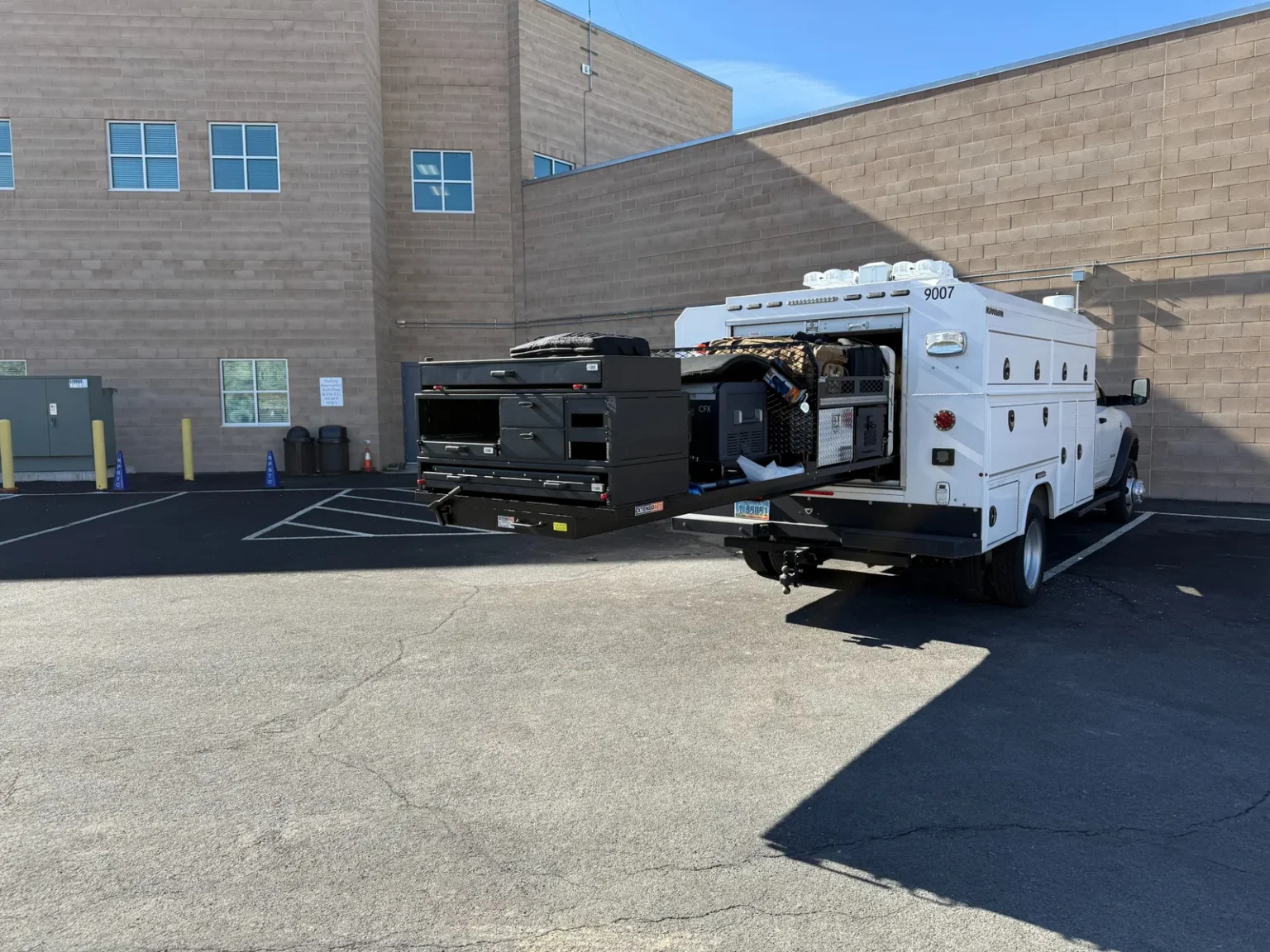
Truck bed slide out weight capacity determines how much gear
you can safely carry. Fleet managers need accurate load ratings to avoid
overloading their vehicles or hardware. Extendobed builds units rated from
1,000 to 3,000 pounds depending on your configuration.
Overloading a slideout risks damage, safety hazards, and
costly downtime for your fleet. Understanding capacity also helps you avoid
exceeding your entire vehicle’s overall payload rating. You will learn how load
ratings work and how to choose the right capacity.
Understanding Truck Bed Slide Out Weight Capacity
Truck bed slide out weight capacity refers to the maximum
load a tray can safely hold. Extendobed rates every unit based on frame
strength, bearing capacity, and deck design. Capacity ranges from 350 pounds on
lightweight units to 3,000 pounds on heavy duty models.
What Is Truck Bed Slide Out Weight Capacity?
Truck bed slide out weight capacity is the maximum weight a
tray can safely support. It depends on the frame, bearings, and deck construction
of your specific unit. Extendobed rates units from 350 pounds up to 3,000
pounds depending on configuration.
Frame strength plays the largest role in determining your
overall load capacity rating. Roller bearings must support the full rated
weight while the tray extends fully. Deck length and material also affect how
much weight a unit can handle.
Higher rated units use thicker steel and larger bearings for
maximum overall strength. Lighter aluminum units trade some capacity for a much
lighter overall vehicle weight.
Review the full slideout
unit lineup to compare capacity ratings across every model. Check
the HD Slideout page for maximum capacity
specifications and complete full details. Knowing your capacity needs upfront
prevents costly mismatches during your entire buying process.
How Load Ratings Are Determined
Load ratings come from careful testing of frame, bearing,
and deck strength together. Extendobed tests every configuration under
conditions that match real world daily use. According to NHTSA,
a vehicle’s rated cargo load reflects the manufacturer’s tested capacity
limits.
Factors that determine load rating include:
•
Frame material and welding quality
•
Bearing size and load bearing force
•
Deck length and reinforcement design
•
Testing under real world working conditions
Steel frames typically support noticeably higher ratings
than lighter aluminum alternatives overall. Bearing size directly affects how
much weight the tray handles during extension. Therefore, testing every truck
bed slide out weight capacity claim matters more than trusting estimates.
Extendobed publishes capacity ratings for every
configuration directly on its product pages. Published ratings reflect tested
performance rather than estimated or purely theoretical maximum figures. Review
the HD Slideout page for tested capacity details on
heavy duty units.
Understanding how ratings are determined helps you trust the
numbers you see. Accurate ratings protect your crew and your equipment from
unexpected hardware failures entirely.
Truck Bed Slide Out Weight Capacity by Configuration
Truck bed slide out weight capacity varies quite a bit
across different configurations. The HD Slideout carries up to 3,000 pounds for
industrial and emergency fleets. The Professional tray supports up to 1,200 pounds
on longer, extended truck beds.
The T-Platform also carries up to 3,000 pounds with extra
wheel well clearance. The Aluminum Slideout SUV supports 350 to 400 pounds for
lighter service vehicles.
|
HD Slideout |
Up to 3,000
lbs |
Industrial and
emergency service fleets |
|
Professional |
Up to 1,200 lbs |
Straightforward
daily hauling |
|
T-Platform |
Up to 3,000 lbs |
Extra deck space
around wheel wells |
|
Aluminum Slideout
SUV |
350-400 lbs |
SUVs and lighter
service vehicles |
Fire and industrial fleets often need the highest capacity
ratings currently available today. SUV drivers and light duty crews often do
fine with lower rated units. Because every mission differs, capacity needs vary
widely across different fleet types.
Review the slideout
unit lineup to compare capacity across every configuration
available. Check the aluminum unit lineup if lighter weight matters
more than raw capacity. Matching capacity to your workload now prevents costly
upgrades later down the road.
Weight Distribution and Point Loading
Weight distribution requirements limit how many competing
slideouts handle heavier daily equipment. Most slides require careful balancing
across the deck to reach their rated capacity. Extendobed slideouts do not
require even weight distribution to perform at full rating.
Point loading advantages that support heavy-duty use
include:
•
No requirement for even weight distribution
•
Ability to load heavy items anywhere on the deck
•
Reduced risk of voiding your warranty
•
Simpler loading process for uneven or bulky gear
Point loading lets you place heavy items anywhere without
balancing the entire deck. That flexibility matters most for bulky, unevenly
shaped tools and heavy job site equipment.
Additionally, point loading reduces the time your crew
spends arranging gear carefully. Many competing slides risk warranty issues if
weight is not evenly distributed correctly. Extendobed removes that restriction
entirely across its full lineup of slideout units.
Point loading capability adds real value for fleets carrying
irregular or heavy gear. You save time and reduce frustration during every
single load and unload cycle. As a result, your crew works faster with far
fewer loading restrictions overall.
Matching Capacity to Your Vehicle and Mission
Matching slideout capacity to your vehicle protects both
your truck and your gear. Your truck’s payload rating limits how much weight
you can safely add overall. According to NHTSA,
exceeding your gross vehicle weight rating creates real safety risks.
Calculate your typical gear weight carefully before choosing
a slideout capacity rating. Leave room for passengers, fuel, and other cargo
within your total payload rating. Meanwhile, consider future needs so you do
not quickly outgrow your chosen capacity.
Talk with your supplier about your typical loads before you
finalize your order. A clear plan upfront saves you from costly capacity
related mistakes down the road. Review pricing details through a custom quote
built around your specific fleet needs.
The right truck bed slide out weight capacity keeps your
fleet safe and efficient. Matching capacity to your mission pays off in safety
and long term value.
Get the Right Truck Bed Slide Out Weight Capacity
You now understand how truck bed slide out weight capacity
shapes your daily performance. Frame strength, bearings, and deck design all
determine how much your tray can hold. Extendobed builds units rated from 350
to 3,000 pounds for every fleet mission.
Review the full slideout
unit lineup to compare capacity across every available
configuration. Our team can help you match capacity to your vehicle and daily
workload. Contact us today to find the right capacity
for your fleet’s next quote.