Made in the USA

MANUFACTURED IN THE USA

(800) 752-0706

Chat With Our Team

Search
Made in the USA

MANUFACTURED IN THE USA

Do Truck Bed Slide-Outs Pay Off for Service and Utility Fleets?

October 07, 2026

Do Truck Bed Slide-Outs Pay Off for Service and Utility Fleets?

Essential Pieces of Equipment Every Firefighter Needs

When you’re pulling breaching tools, rescue gear, or a generator off the back of your truck, the weight rating on your heavy-duty truck bed slide isn’t a spec-sheet detail. It’s the reason the tray holds when it matters.

Key Takeaways

Here’s what to know before you compare ratings:

  • A slide’s published weight rating is usually measured with the tray retracted. What matters is whether it holds at full extension.
  • Once a tray clears the tailgate, it becomes a cantilever, and the load puts far more stress on the rails, bearings, and mounting.
  • Heavy-duty slide-outs for first responder and heavy equipment use are typically rated from about 1,200 to 3,000 pounds.
  • Welded steel frames, full-length ball-bearing rails, frame-level mounting, and reinforced decking are what separate a heavy-duty rating from a light-duty one.
  • Size your slide to your heaviest normal load, not your average one.

How Heavy Duty Truck Bed Slide Weight Ratings Are Actually Measured

Static Rating

Most published weight ratings start as a static number: how much the platform can hold while it’s retracted and supported along its full length inside the bed.

Extended Rating

Some manufacturers also publish a separate rating for the tray when it’s extended. That’s when the load sits farthest from the mounting point, and the rails and bearings do the most work.

You’ll also see these platforms sold as a cargo slide instead of a bed slide, but the question is the same either way: does the number you’re comparing hold at full extension, or only when retracted? That matters more than the headline number on the box.

Why Full Extension Changes the Math

A truck bed slide-out tray becomes a cantilever the moment it clears the tailgate. One end is supported, and the other hangs over open air. The farther it extends, the more leverage the load puts on the rails, the bearings, and the mounting hardware.

Light-duty rails can lose real capacity once they’re fully extended, even if the static number looked strong in the listing. Full-length ball-bearing rails fix that. They’re rated to carry the load through the entire range of motion, so a heavy duty bed slide doesn’t become a liability right when you need it most: fully extended, with your gear pulled out where you can reach it.

Explore Extendobed’s heavy-duty slide-out units, engineered to hold their rated capacity through full extension.

What First Responders and Heavy Equipment Crews Actually Haul

A contractor with a couple of toolboxes isn’t hauling anywhere near the same weight as:

These loads are heavy, dense, and often concentrated in one spot instead of spread evenly across the bed. That’s exactly the kind of load that exposes an underrated slide.

Heavy-duty models are generally built around a 1,200 to 3,000 pound range. That range is what separates a truck bed slide-out built for specialized gear from one designed for lighter daily use.

The Build Features Behind a Heavy Duty Bed Slide Rating

A handful of construction choices separate a heavy-duty rating from a light-duty one:

  • Welded steel frames instead of light aluminum extrusions, for units that need to carry the top end of the weight range.
  • Full-length ball-bearing rails that support the load through the entire extension instead of concentrating stress at one point.
  • Frame-level mounting that ties the slide into the vehicle’s structure rather than the sheet metal of the bed, so the load has somewhere solid to go when the tray is extended.
  • Reinforced decking that resists flexing under heavy point loads, like a locked evidence box or a generator, rather than gear spread evenly across the platform.
  • Purpose-built features for specific loads, such as ATF-compliant day boxes, locking weapons drawers, and heavy-duty ramps for robots and breaching tools on SWAT and hazmat configurations.

How Vehicle Choice Changes Your Cargo Slide Setup

The vehicle you’re upfitting sets the limits on what a slide can safely carry, and each platform comes with its own trade-offs:

  • Pickups with a full-depth bed support the widest range of heavy-duty ratings. There’s more structure to mount into and more length to spread the load across.
  • Cargo vans need a slide built around the van’s own frame points, and ratings depend heavily on the van model.
  • SUVs need a lighter build. A heavy-duty rating built for a pickup bed doesn’t transfer directly to an SUV cargo area, so SUV-specific units are rated lower.

Matching the Right Heavy-Duty Model to Your Load

Start with the heaviest load you carry on a normal shift, not your lightest or your average. If your crew occasionally hauls something heavy but usually runs lighter, size to the heavy day. A slide is only as useful as its worst-case load.

For first responder and heavy equipment applications, a heavy-duty truck bed slide rated at the higher end of the range, built on steel rails and mounted to the vehicle frame, is the safer choice over a mid-range tray sized for average use.

Frequently Asked Questions

How much weight can a truck bed slide hold?

It depends on the build. Light-duty trays typically top out under 1,000 pounds. Heavy-duty models built on steel rails with frame mounting run from about 1,200 to 3,000 pounds. SUV-specific slides are rated lower, generally in the low hundreds of pounds.

What does full extension do to the weight rating?

Once a slide clears the tailgate, it becomes a cantilever, and the load’s leverage on the rails and mounting hardware increases the farther it extends. A well-built heavy-duty slide is engineered to hold its rated capacity through the full range of motion. A lighter-duty tray may not.

Will a slide-out handle heavy first responder or rescue gear?

Yes, if it’s built for it. A heavy-duty truck bed slide with welded steel construction, full-length bearings, and frame-level mounting is made for exactly that kind of load: heavy, dense, and often concentrated in one spot.

What features let a slide carry more weight safely?

Steel frame construction instead of aluminum, full-length ball-bearing rails, frame-level mounting instead of sheet-metal bed mounting, and reinforced decking that resists flexing under heavy point loads.

Which heavy-duty slide-out is right for my load and vehicle?

Match the rating to your heaviest normal load, not your average one, and confirm the rating holds at full extension. Your vehicle narrows it down from there. Pickups support the widest range of heavy-duty ratings, vans depend on the vehicle’s own frame points, and SUVs need a lighter build.

Upfit Your Work Vehicle with an Extendobed Heavy Duty Truck Bed Slide

If your crew hauls SWAT, hazmat, rescue, or heavy trade equipment that a standard tray was never built for, you need a slide that holds up at full extension. Since 1987, Extendobed has built heavy-duty slide-out units on welded steel frames with frame-level mounting. They’re rated up to 3,000 pounds and designed to hold that rating through more than 100% extension. Contact Extendobed to find the right model for your gear and vehicle.
Sticky
Comments Off on Do Truck Bed Slide-Outs Pay Off for Service and Utility Fleets?

Do Truck Bed Slide-Outs Pay Off for Service and Utility Fleets?

September 30, 2026

Do Truck Bed Slide-Outs Pay Off for Service and Utility Fleets?

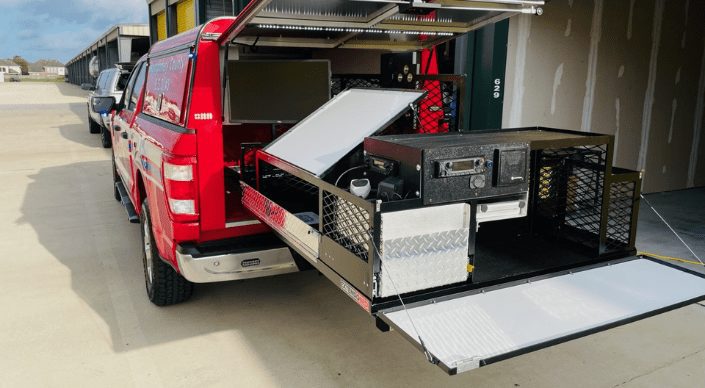
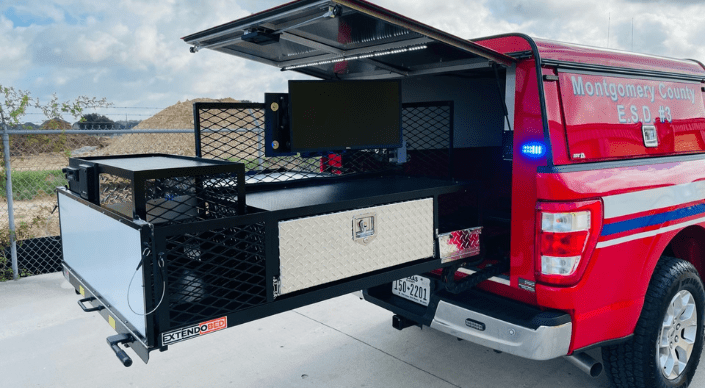
Red truck with an extendobed upfit.

Service managers don’t ask whether a truck bed slide-out looks good. They ask whether it pays for itself. Poor service truck organization and disorganized work truck storage cost fleets money every day, even when no one tracks it on a line item.

Key Takeaways

  • Disorganized work truck storage already costs you. Time spent hunting for tools and strain from reaching into a loaded bed add up across every truck, even if they never show up on a line item.
  • Full extension saves minutes on every stop. A truck bed slide-out that extends up to 110% of the bed length brings the whole load to the technician at ground level.
  • Less reaching means less injury exposure. Overexertion is one of the costliest categories of workplace injury, and a slide-out removes a specific, repeated source of it.
  • Payback is simple to estimate. Stops per day, times minutes saved per stop, times loaded labor rate gives you weekly savings per truck.
  • One system works across a mixed fleet. Extendobed builds slide-out and stationary drawer units for pickups, vans, and SUVs, so crews load and inspect every vehicle the same way.

The Real Costs of Poor Service Truck Organization

Every fleet already pays for bad service truck storage, even if it never shows up on a line item labeled that way. The cost usually lands in two places:

  • Lost time: A technician who spends a few extra minutes per stop digging through a cluttered bed for the right fitting or tool loses time that adds up across dozens of stops a week.
  • Physical strain: Climbing into a loaded bed and reaching for gear stored at the front is one of the more common ways a technician strains a back or shoulder on a routine call.

None of this shows up clearly until you add it up across your fleet.

How a Truck Bed Slide-Out Shortens Time on Every Call

A truck bed slide-out solves the access problem directly. Because the platform extends past the tailgate, in some cases up to 110% of the bed length, your technicians can see and reach the entire load from ground level instead of climbing in and moving gear aside to get to what is stored at the front. No climbing. No digging.

Shaving even a few minutes off tool retrieval on every stop adds up fast. A technician making eight stops a day recovers real working time every week, and that time scales across every truck running the same route structure.

The Safety and Workers’ Comp Case for Better Access

Overexertion injuries, the kind caused by lifting, reaching, and awkward carrying, are one of the most expensive categories of workplace injury across every industry. Liberty Mutual’s Workplace Safety Index puts the direct employer cost of overexertion injuries at more than $15 billion a year, and musculoskeletal injuries account for roughly a third of all lost-workday claims.

That figure spans every industry, not just service fleets, but the mechanism behind it shows up in a truck bed too: climbing into a pickup or cargo van and reaching for gear stored deep in the bed puts repeated strain on the lower back and shoulders. A slide-out that brings the load to the technician instead of the other way around removes a real share of that strain.

Extendobed’s optional Power Drive motorized extension goes a step further, taking the physical effort out of moving a fully loaded tray.

Durability and Resale: What a Heavy Duty Slide-Out Protects

A loose bed full of sliding tools and parts damages your gear and your truck. A heavy-duty slide-out protects both in three ways:

  • It keeps the load secured and off a bare bed liner, which matters when you resell or reassign that truck.
  • It helps fleets that standardize on one durable, well-built storage system avoid the worn, beat-up look that knocks resale value down on trucks that carried loose gear for years.
  • When it is rated for the actual weight a crew hauls, not just the average load, it holds up to daily loading and unloading for the life of the truck instead of needing replacement partway through.

A Simple Way to Estimate Payback, One Truck at a Time

The math is simpler than most fleet managers expect. Take your stops per day, multiply by the minutes saved per stop from faster access, then multiply by the technician’s fully loaded hourly cost.

For illustration only, using round numbers: a technician making eight stops a day who saves five minutes per stop recovers about 40 minutes daily, about three hours and 20 minutes a week. At a loaded labor rate of 60 dollars an hour, that is about 200 dollars a week in recovered time on a single truck, before counting fewer reaching injuries or repeat trips for a missed tool. Run the same formula with your own stop counts and labor rate, then multiply by the number of trucks you plan to upfit.

Standardizing Fleet Vehicle Storage Across Trucks and Vans

Most service and utility fleets run more than one vehicle type. Pickups, cargo vans, and the occasional SUV end up on the same route board, and a mismatched set of storage solutions makes training, restocking, and inspection harder than it needs to be.

Extendobed builds slide-out and stationary drawer units sized for pickups, vans, and SUVs, so your fleet vehicle storage can follow the same loading pattern and inspection checklist across vehicle types even when the vehicles themselves don’t match. Cargo van storage and pickup bed storage end up working the same way for the crew, which is what makes standardizing across a mixed fleet realistic.

Frequently Asked Questions

Are truck bed slide-outs worth the money for a service fleet?

For fleets running heavy or mixed daily loads, most crews recover the added cost through faster stops and fewer reaching injuries within a year or two. Payback depends on stop volume, labor rate, and current injury exposure. Run the math above using your own numbers.

How does a slide-out save time on a typical service call?

Full extension means the technician sees and reaches the whole load without climbing into the bed or moving gear aside, cutting the minutes spent searching for the right tool or part on every stop.

Can better storage lower workers comp and injury costs?

Reducing the deep reaching and awkward lifting that comes with digging through a loaded bed removes a real source of overexertion strain, one of the costliest categories of workplace injury industry-wide. It won’t eliminate every claim, but it removes a specific, repeated risk.

How long does a heavy duty slide-out last?

A well-built slide-out rated for the actual load a crew hauls is designed to last for the working life of the truck, provided it is not loaded beyond its rating.

How do I estimate the return before upfitting my whole fleet?

Start with one truck. Track stops per day, minutes saved per stop, and the technician’s loaded hourly rate, then multiply that weekly savings by the number of trucks you plan to upfit.

Truck Bed Slide-Outs Built for the Way Your Fleet Works

If your fleet is ready to see what full access does for time per call and technician safety, Extendobed’s heavy-duty slide-out units are built for daily service and utility work, with load ratings up to 3,000 pounds and configurations for pickups, vans, and SUVs. Every unit is manufactured in the USA, and Extendobed has been building slide-out systems since 1987. Contact Extendobed to run the numbers on your own fleet.

Sticky
Comments Off on Do Truck Bed Slide-Outs Pay Off for Service and Utility Fleets?

How to Match a Truck Bed Storage System to the Way You Work

September 24, 2026

How to Match a Truck Bed Storage System to the Way You Work

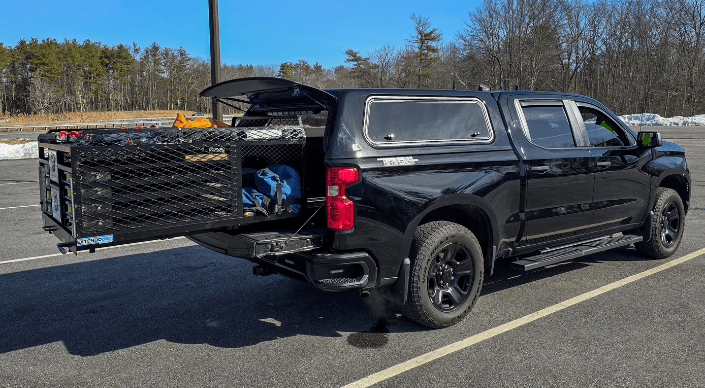
Black truck with an extendobed upfit

Every work truck ends up carrying a different mix of gear, and the right storage setup depends on what’s actually in your bed, not on what’s trending in a forum thread. Truck bed storage systems fall into a handful of distinct categories, and each one is built around a different way of working. Choosing the wrong type means fighting your own truck every day: climbing over gear, unloading half the bed to reach one tool, or watching a cheap unit sag under a load it was never built to carry.

The Main Types of Truck Bed Storage Systems

Most truck bed storage systems fall into four categories:

  • Truck bed slide-outs: This is what Extendobed is known for. A platform that rides on bearings and extends past the tailgate, in some cases up to 110 percent of the bed length, so the load comes to you instead of you climbing in after it. Some crews call this a sliding truck bed tray or a truck bed slide-out tray, but the function is the same: full access without unloading.
  • Truck bed drawer systems: Individual compartments that pull out one at a time, built for organizing smaller, categorized gear rather than hauling one large load.
  • Fixed trays: A stationary platform bolted into the bed that adds a work surface and some load protection but does not move.
  • Toolboxes: Cross-bed or side-mounted boxes for tools and small parts, usually the lowest upfront cost and the smallest capacity.

Start With What You’re Hauling

Weight is the first filter, not the last. Drawer systems typically top out at 600 pounds per drawer, with the overall deck rated higher. A truck bed slide built on steel bearings can carry anywhere from 800 to 3,000 pounds while staying fully supported through the entire range of motion. If your crew hauls generators, compressors, or structural material, a system rated for that load has to come before style or price.

How Often You Reach for Gear Changes the Math

A crew that’s in and out of the bed all day needs different equipment than one that loads up once and unloads at the job site. This is where full extension matters. A truck bed slide-out that reaches past the tailgate puts everything, including gear stored at the front of the bed, within reach without climbing in or dragging items across a rough deck. Drawer systems work well when the load is consistent and organized by category, but they still limit you to one compartment at a time.

In-body CTA: Explore Extendobed’s heavy-duty slide-out units to compare load ratings and vehicle fit before you buy.

Match the System to Your Vehicle

  • Pickups with a full-depth bed get the most benefit from a slide-out, since there’s room for the platform to extend without losing usable bed length.
  • Cargo vans often fit a stationary or truck bed drawer system better, since interior height and side access change the equation.
  • SUVs need a lighter build. An aluminum slide out designed around SUV weight limits keeps the vehicle from carrying dead weight it doesn’t need.

Weigh Upfront Cost Against Years of Daily Use

A toolbox or fixed tray costs less to buy. A heavy duty slide out costs more upfront and pays that back in fewer strained backs, less time spent unloading gear to find one tool, and less wear from gear sliding around loose. For a truck that’s a daily work tool rather than an occasional hauler, the multi-year total cost usually favors the sturdier system.

Where a Heavy Duty Slide Out Fits Best

Crews hauling heavy, mixed equipment, generators, tool chests, ladders, and material that doesn’t fit neatly into drawers, and who need full access to the front of the bed without unloading everything first, are the clearest fit for a heavy duty truck bed slide out. That combination of high load rating and full extension is the specific problem this category of storage system solves. It is not the right call for a truck that mostly carries small, categorized parts. A truck bed drawer system is the better and cheaper fit there.

Frequently Asked Questions

What are the different types of truck bed storage systems?

The main categories are truck bed slide outs, truck bed drawer systems, fixed trays, and toolboxes. Each is built around load capacity and access pattern, not a straightforward upgrade from one to the next.

How do I know which storage system is right for my work?

Start with two questions: how much weight you’re hauling, and how often you need to reach gear stored at the front of the bed. Those two answers narrow the field faster than browsing options.

Do I need a slide out or will a drawer system be enough?

If your load is heavy, mixed, or oversized, a slide out gives you full access without unloading. If your gear is smaller and organized by category, a truck bed drawer system is usually enough and costs less.

How much weight do these systems need to handle?

It depends on the job. Drawer systems generally handle 250 to 600 pounds per compartment. Slide out systems built on bearings can handle 800 to 3,000 pounds while remaining fully supported when extended.

Will a storage system fit my truck, van, or SUV?

Yes, but the right build depends on the vehicle. Pickups fit full-size slide outs well, vans often suit stationary or drawer builds, and SUVs need a lighter aluminum slide out designed for their weight limits.

Find the Right Solution with Extendobed

If your crew hauls heavy or mixed gear and needs full access to the front of the bed, Extendobed’s heavy duty slide out units are built for that exact job, with load ratings up to 3,000 pounds and vehicle-specific builds for pickups, vans, and SUVs. Get a quote to find the right fit for your truck.

Sticky
Comments Off on How to Match a Truck Bed Storage System to the Way You Work

Choosing the Right Stationary Drawer System for a Police SUV

April 23, 2026

Choosing the Right Stationary Drawer System for a Police SUV

Upfitted police SUV

Patrol officers carry a lot of gear, and the cargo area of a police SUV fills up fast. Body armor, traffic cones, a rifle case, first-aid supplies, a radar unit, evidence bags, and personal items all compete for the same limited space. Without a system to organize and secure it, that cargo area turns into a pile of loose items that shifts with every turn and buries the one thing you need when you need it most.

Stationary drawer systems solve that problem. They bolt into the cargo area of your SUV and give every piece of equipment a designated, locked-down location. No digging. No climbing into the vehicle to reach something at the back. You open the tailgate, pull the drawer, and grab what you need.

But not all drawer systems fit every SUV. Extendobed builds stationary law enforcement SUV storage units designed for specific vehicle platforms, and the differences between them matter when outfitting a fleet. 

Key Takeaways

  • Vehicle platform drives the decision. Extendobed has stationary drawer systems sized specifically for Ford Explorer/Interceptor and Chevrolet Tahoe/Dodge Durango cargo areas. The right unit is the one made for the SUV your department drives.
  • Drawer extension affects daily usability. The Explorer unit’s 200% extension provides full gear access and easy spare tire reach, whereas the Tahoe/Durango’s 110% extension pairs with a deeper cargo footprint for departments that carry bulkier equipment.
  • Configuration should match what officers carry. Two drawers separate weapons from general gear for quick categorized access. A single deep drawer works better for bulkier items or departments that prefer fewer access points. Both lock independently.
  • Built-in electronics trays keep patrol wiring organized. Precut wiring holes and top-mounted access let officers and fleet technicians service radios, light controllers, and routers without unlocking secure storage.
  • QuietRide construction and powder-coat finish are ideal for shift work. Drawers stay quiet on rough roads, so they don’t interfere with radio communication, and the finish protects against corrosion and daily wear over years of patrol use.

Why Buy Stationary Drawer Systems for Patrol SUVs?

A stationary drawer system is a built-in unit that stays fixed in the cargo area. Unlike a full slide-out platform, it does not extend beyond the vehicle. It is a compact, secure storage solution specifically for SUVs where patrol officers need fast access to gear without crowding the entire cargo space.

Stationary systems are created for the daily reality of patrol work. Officers run calls back-to-back, and they need a police SUV drawer system that keeps weapons secure, electronics organized, and everyday tools within reach. Heavy-duty locking drawers prevent smash-and-grab theft during stops. A built-in electronics tray holds radios, lighting controls, and wiring without cluttering the cabin.

While incident commanders running a mobile command unit would benefit from a larger slide-out platform, departments that don’t need the full-bed access do well with a stationary unit that delivers the organization and security benefits at a smaller footprint and lower weight. 

Explorer/Interceptor vs. Tahoe/Durango: What Is Different?

Extendobed manufactures stationary drawer systems for pickup trucks and two primary SUV platforms used in law enforcement: 

  • Ford Explorer/Interceptor 
  • Chevrolet Tahoe/Dodge Durango 

Each is custom-built to fit its vehicle, and the dimensions, capacity, and configuration options reflect the different cargo areas of those platforms.

Ford Explorer and Interceptor Units

The Explorer/Interceptor Unit: 

  • Measures 37 inches wide by 20 inches long by 21 inches high, with a 4-inch top perimeter containment rail 
  • Includes a built-in electronics tray (35 inches wide by 19 inches long by 6 inches high)
  • Has two locking drawers, each measuring 33 inches wide by 19 inches long by 6 inches high; holds up to 300 pounds, with drawers extending 200% to pull out well beyond the unit frame

The 200% extension is a practical detail worth paying attention to because officers can access gear and still reach the spare tire underneath the unit without removing the entire system. On a busy shift, that kind of access saves time and frustration.

Chevrolet Tahoe and Dodge Durango Units

The Tahoe/Durango Unit:

  • Is larger at 37 inches wide by 37 inches long by 21 inches high 
  • Comes in two configurations: a single 13-inch-high drawer or two 6-inch-high drawers 
  • Both configurations have 110% extension, QuietRide construction, and a combined load capacity of up to 600 pounds

The deeper cargo area in the Tahoe and Durango units give it nearly double the length of the Explorer model. The extra depth means more storage volume for departments that carry heavier or bulkier equipment in their patrol SUVs.

Side-by-Side Comparison

Feature

Explorer/Interceptor

Tahoe/Durango

Overall Dimensions

37″W x 20″L x 21″H

37″W x 37″L x 21″H

Drawer Options

Two 6″-high drawers

One 13″ drawer or two 6″ drawers

Combined Capacity

Up to 600 lbs. (300 lbs. per drawer)

Up to 600 lbs.

Drawer Extension

200%

110%

Electronics Tray

Yes, 35″W x 19″L x 6″H

Yes, with precut wiring holes

QuietRide Construction

Yes

Yes

Powder-Coat Finish

Yes

Yes

Spare Tire Access

Yes, via 200% extension

Yes, via 110% extension

The Electronics Tray: Built for How Patrol Vehicles Are Wired

Both units include a built-in electronics tray with precut wiring holes on the back panel, which is no minor feature. Patrol SUVs are loaded with aftermarket electronics: light controllers, radio systems, mobile routers, and siren modules. Running wiring through an organized tray with precut slots keeps cables accessible for maintenance and out of the way during daily use.

The tray sits at the top of the unit and can be accessed without unlocking the drawers. Officers or fleet technicians can reach electronic components without opening secure storage, which matters when managing radios or swapping out equipment between shifts.

Single vs. Double Drawer: How to Decide

For the Explorer/Interceptor, the standard configuration is two locking drawers. But the Tahoe/Durango gives departments a choice: a single deep drawer (13 inches high) or two stacked drawers (each 6 inches high).

The decision comes down to what your officers carry. Two drawers separate gear by category. One drawer can hold weapons and ammunition while the other stores first-aid kits, traffic equipment, or personal protective equipment. The single-drawer option has one large, deep compartment, which works well for departments that carry bulkier items or prefer fewer access points to manage.

One thing to know: Stationary drawer systems are built for standard patrol loads, not tactical deployment. Departments carrying ballistic shields, breaching tools, munitions, or explosives need the larger platform and specialized features of Extendobed’s SWAT slide-outs, which include ATF Type III day boxes, heavy-duty ramps for robots and breaching gear, and locking weapons drawers sized for tactical kits. For everyday patrol weapons and ammunition, the stationary drawer system handles the job.

Both configurations lock with heavy-duty latches to prevent unauthorized access and resist forced entry. This feature matters when a vehicle is parked at a scene and the officer is away from the tailgate.

If you are evaluating a secure drawer system for patrol SUVs and want to see which configuration fits your fleet, Extendobed can walk you through the options for your specific vehicles.

QuietRide Construction and Powder-Coat Finish

Every Extendobed stationary drawer system is constructed with QuietRide. The drawers are designed to ride quietly during patrol, even on rough roads. Rattling drawers are more than an annoyance; they can interfere with radio communication and make it harder to hear what is happening outside the vehicle during a stop.

The powder-coat finish protects the welded steel frame and aluminum drawers against corrosion, scratches, and the daily abuse the patrol equipment takes. These units can withstand years of shift-after-shift use, and a durable finish keeps the system looking and functioning like it should long after installation.

Installation and Compatibility

Stationary drawer systems mount directly to the vehicle’s cargo floor using supplied hardware. Most departments have their fleet upfitters handle the install, but the process is straightforward enough that in-house technicians can perform the work as well.

One common question departments often ask is whether the drawer system works with rear-seat cages and prisoner transport partitions. Because these units are designed specifically for each vehicle platform, they fit alongside the equipment and partitions that law enforcement vehicles already have in place. If your agency runs a mixed fleet of Explorers and Tahoes, each vehicle receives the unit sized for its cargo area.

How to Choose the Right System for Your Department

Start with the vehicle. If your patrol fleet runs Ford Explorers or Interceptors, the Explorer unit is the right fit. If your fleet uses Chevrolet Tahoes or Dodge Durangos, the Tahoe/Durango unit matches those cargo dimensions.

From there, consider what your officers carry and how they use the vehicle. Departments with heavy traffic enforcement loads may need the deeper Tahoe/Durango unit to store portable scales and extra signage. For units where traffic enforcement is the primary mission rather than a secondary load, Extendobed’s dedicated traffic enforcement slide-outs may be the better fit, with integrated scale racks, fold-down writing tables, and full-extension drawers fororganizing radar units, cones, flares, and citation paperwork in one place.

Think about spare tire access as well. The 200% extension on the Explorer unit makes tire changes in the field quicker. The 110% extension on the Tahoe/Durango unit still provides access, but departments should confirm the layout works with any additional accessories or modifications they have planned.

Frequently Asked Questions

Which SUV models are compatible with Extendobed stationary drawer systems?

Extendobed builds stationary units for Ford Explorer/Interceptor, Chevrolet Tahoe, and Dodge Durango SUVs. Each unit is custom sized to correspond to the cargo dimensions of its specific platform.

Can I access the spare tire with a drawer system installed?

Yes. The Explorer/Interceptor unit has a 200% drawer extension, and the Tahoe/Durango extends 110%. Officers can reach the spare tire without removing the unit in either option.

How much weight can the drawers hold?

Both platforms support up to 600 pounds of combined drawer capacity. On the Explorer unit, it breaks down to 300 pounds per drawer.

Do I need a professional installer?

The units mount to the cargo floor with supplied hardware. Fleet upfitters and in-house technicians can install the units. Extendobed also offers installation support for departments that request it.

Can one drawer system support both weapons storage and general equipment?

Yes. The dual-drawer configuration lets departments separate weapons and ammunition from general patrol gear. Locking mechanisms on each drawer add independent security.

Built for the Way Your Department Patrols

The right stationary drawer system keeps your officers organized, secures equipment, and prepares your vehicles for whatever the shift brings. Whether your fleet runs Explorers, Tahoes, or a mix of both, Extendobed builds law enforcement SUV storage systems sized and configured for the vehicles your department drives.

Every unit is manufactured in the USA with welded steel frames, aluminum drawers, and the QuietRide construction that patrol vehicles demand. Contact Extendobed to design a stationary drawer system tailored to your fleet and mission.

Sticky
Comments Off on Choosing the Right Stationary Drawer System for a Police SUV

First-Response vs. Command-Center Units: Which Fire Slide-Out Is Best for Your Department?

April 08, 2026

First-Response vs. Command-Center Units: Which Fire Slide-Out Is Best for Your Department?

Command center vehicle upfit

Not every fire slide-out is built for the same job. Some departments need a unit that puts extrication tools and medical gear within arm’s reach the second they arrive on scene. Others want a mobile workspace that keeps radios, laptops, and incident command boards organized for hours-long operations.

The difference between a first-response slide-out and a fire command-center slide-out comes down to mission. Get the match right, and your crew works faster with fewer fumbles. Get it wrong, and you end up with a system that either has too many features slowing you down or not enough to keep a complex scene running.

Key Takeaways

  • Mission drives the build. First-response slide-outs are designed for speed and immediate tool deployment. Command-center units are intended for sustained coordination during extended or multi-agency incidents. Matching the unit to your primary mission is the most important decision you’ll make.
  • Every feature is a trade-off. Added capability means more complexity and weight. A dry-erase board is invaluable for an incident commander and an obstacle for a rescue crew trying to pull a backboard in under a minute.
  • Modularity protects your investment. A slide-out that accepts add-on drawers, boards, and electronics mounts can evolve with your department’s needs, eliminating the need to replace the entire system as call volumes or missions shift.
  • Hybrid configurations exist for a reason. Departments that handle both rapid response and incident command benefit from custom builds that combine open-access rescue areas with dedicated command features.

Rapid Intervention vs. On-Scene Coordination

First-response slide-outs are designed for speed. The crew pulls up, extends the tray, and grabs what they need, which can be anything from medical bags, self-contained breathing apparatuses (SCBA), extrication tools, and hand tools. Everything is positioned for fast deployment with minimal steps between the truck and the scene.

Command-center units serve a different purpose. They turn a pickup bed or SUV cargo area into a working command post. Radios, laptops, chargers, documentation kits, and incident boards all have designated spots. The goal is sustained coordination, not a 30-second grab.

Rapid intervention and on-scene coordination are not interchangeable. When these two missions are treated the same, problems follow. A first-response crew outfitted with a command-center layout wastes time working around features they don’t need. A battalion chief trying to run incident command from a bare rescue tray must improvise with loose gear and no workspace. Matching the unit type to the actual mission is where effective outfitting starts.

Equipment Layout Access and Organization Strategy

How equipment is organized on the slide-out platform directly affects how fast your team operates. First-response layouts front-load the most critical items. The gear you reach for at the outset sits closest to the tailgate, visible and unobstructed the moment the tray extends.

Command-center layouts work differently. They prioritize categorized storage and workspace integration. Radios go in one section, electronics in another, paperwork and reference materials in a third. The emphasis is on keeping a complex set of tools organized over a longer period, not on shaving seconds off a single retrieval.

Typical equipment priorities by unit type:

  • First Response: Medical bags, extrication tools, SCBA, hand tools, and cribbing
  • Command Center: Radios, laptops, chargers, documentation kits, incident boards, and map boards

Layout shapes retrieval time and decision-making speed. A well-organized first-response unit gets tools into hands without hesitation. Meanwhile, a well-organized command-center unit keeps the incident commander focused on the operation instead of searching for a radio or a pen.

Feature Trade-Offs: Simplicity vs. Capability

First-response units keep it simple. Fold-down gates allow fast access from the side or rear. Containment cages prevent gear from shifting during rapid transit. Open or semi-open configurations let crew members grab what they need without unlatching doors or opening drawers.

Command-center units carry more built-in features. Dry-erase boards and map boards provide planning surfaces. Bookcase-style enclosures store binders, reference materials, and electronics. Integrated workspaces give multiple people room to operate simultaneously from the truck bed.

The trade-off is straightforward. Every added feature increases the capability for extended operations, but it also adds complexity and weight. For a crew that must pull a backboard and extrication tools in under a minute, a dry-erase board and a bookcase are impediments. For a battalion chief managing a multi-agency incident, those same features are what make the truck useful.

Need help choosing between a first-response or command-center configuration? Contact Extendobed to talk through your department’s operational priorities and build a slide-out that fits.

Space, Weight, and Capacity Considerations

Extendobed’s standard fire slide-outs support up to 3,000 pounds, which gives departments serious room to load heavy gear. But capacity alone doesn’t tell the full story. How you fill that space matters.

First-response equipment tends to be bulky. Extrication tools, hose packs, and SCBA rigs take up physical room and add weight quickly. These units benefit from open-platform layouts with tie-downs and containment caging that maximize the available deck space.

Command-center equipment is often smaller but more varied. Radios, laptops, chargers, and documentation don’t weigh as much individually, but they need compartments, drawers, and shelving to stay organized. Built-in structures like shelving and electronics racks eat into usable bed space.

Departments should also consider vehicle weight distribution. A fully loaded command-center unit with planning boards, electronics mounts, and drawers adds more fixed weight to the slide-out than an open rescue tray loaded with removable gear. That difference can affect vehicle handling, especially on pickups with shorter wheelbases.

Planning for Growth and Changing Needs

Departments change. Budgets shift. Call volumes increase. The slide-out installed today still needs to work for your department in three to five years.

Modular configurations make that goal possible. A department starting with a first-response slide-out can add drawers, electronics mounts, or board slots later, without replacing the entire unit. Extendobed builds systems that accept add-on components, so upgrading from a basic rescue tray to a hybrid or command-focused unit doesn’t mean starting from scratch.

Common upgrade paths include adding partitions for better gear separation, mounting dry-erase or map boards to an existing frame, installing locking drawers for sensitive equipment, and integrating electronics trays for radios and laptops.

The goal is a system that grows with the department’s needs. Buying a unit that requires a full replacement every two or three years isn’t a budget-friendly strategy. Purchasing one that accepts new components over time is.

Response Time and Crew Efficiency on Scene

For first-response crews, everything boils down to time-to-tool. During the first few minutes after arrival, having medical gear and extrication tools positioned for instant access can directly affect outcomes. A properly configured first-response slide-out comparison shows that front-loaded layouts with open access consistently reduce retrieval time as compared to enclosed cabinet-style systems.

For command-center operations, efficiency looks different. A prolonged incident, multi-agency response, or complex fire scene requires sustained coordination. Command-center slide-outs improve that coordination by giving the incident commander a dedicated workspace with communication tools, documentation, and planning surfaces all within reach.

Key performance impacts of choosing the right unit:

  • Faster tool retrieval during the initial response window
  • Less confusion on the scene when gear has a designated location
  • Improved crew safety by reducing the time spent climbing into truck beds
  • Better communication flow during complex, multi-agency operations

Making the Right Choice for Your Department

Start with the question that matters most: what does your department respond to, and how often?

If most of your calls are medical emergencies, vehicle accidents, or structure fires calling for immediate intervention, a first-response slide-out gives you the speed advantage. Front-loaded access, containment caging, and a simple layout keep first responders moving without unnecessary steps.

If your vehicle primarily serves as a mobile command post for multi-agency incidents, large-scale events, or extended scene operations, a command-center configuration delivers the workspace and organization the leadership team needs.

For departments that see a mix of both, a hybrid or custom solution often makes the most sense. Build around the primary mission, then add modular features that support the secondary one. That way, you’re covered for the calls run most often without giving up capability for the calls that demand more.

Budget matters, too. A basic first-response slide-out costs less upfront, but if your department regularly needs command features, retrofitting later can close the gap. Either way, the smartest purchase is the one that matches how the team operates, not the one with the longest feature list.

FAQs

What is the department’s primary use case: rapid response or coordination?

Evaluate your call data. If most responses require immediate intervention with medical or extrication tools, a first-response unit fits. If your vehicle regularly supports incident command, a command-center unit is the better match.

Which tools must be accessible within seconds of arrival?

Medical bags, SCBA, and extrication equipment are the most common immediate-access items. These should be front-loaded on the platform and positioned for grab-and-go retrieval.

Can one slide-out system support both response and command functions?

Yes. Hybrid configurations can combine open-access areas for rescue gear with built-in compartments for radios, laptops, and planning boards. Extendobed builds modular systems that serve both roles.

What features provide the most value for long-term use?

Modularity, heavy-duty construction, and configurable layouts are in it for the long haul. A system that accepts add-on drawers, boards, and electronics mounts gives your department the flexibility to adapt without replacing the entire unit.

Made for the Way Your Department Responds

The best fire slide-out isn’t the one with the most features. It’s the one that matches your mission. A first-response unit designed for speed keeps your crew moving when seconds count. A command-center unit configured for coordination keeps your operation running when complexity demands it.

Extendobed designs and builds fire slide-out systems that fit the way your department works. Whether you need a straightforward rescue tray, a fully equipped command-center configuration, or a custom hybrid that covers both, every unit is manufactured in the USA and rated for up to 3,000 pounds.

Ready to build a slide-out that fits your department? Contact Extendobed today to start designing a system tailored to your response style and operational needs.

Sticky
Comments Off on First-Response vs. Command-Center Units: Which Fire Slide-Out Is Best for Your Department?

Upfitting Traffic Enforcement Vehicles for Maximum Efficiency

March 12, 2026

Upfitting Traffic Enforcement Vehicles for Maximum Efficiency

Traffic enforcement truck with Extendobed upfit.

A traffic enforcement vehicle is always in use. Officers are continually out of the vehicle, managing portable scales, road cones, spike strips, signage, and first-aid gear, often on a busy highway shoulder with limited time and restricted visibility. In these situations, the vehicle must keep up.

Standard police upfits handle weapons and patrol gear well. Traffic enforcement upfits are a different problem. The equipment is larger, heavier, more varied, and more sensitive. Without the right storage systems in place, gear can shift during transport, scales get damaged, and officers waste time digging through compartments they cannot see into at night.

What Traffic Units Carry

The inventory in a traffic enforcement vehicle is more varied than that of most patrol units. Officers typically manage the equipment noted below:

  • Portable scales (axle and wheel position), often in padded carrying cases
  • Traffic cones and foldable delineators
  • Road flares and electronic flares
  • Spike strips and traffic spike systems
  • Citation books, tablets, and handheld radar units
  • First-aid kits, trauma bags, and basic medical supplies
  • Reflective vests, rain gear, and high-visibility signage
  • Scene lighting equipment

The weight and bulk of this inventory drive every storage decision. Scales specifically require dedicated mounting or cushioned compartments. A scale that slides around in a bare truck bed will need calibration at the worst possible time.

Scale Racks and Compartments: Protecting Sensitive Equipment

Portable scales are the most equipment-intensive item that most traffic units carry. They are expensive, require regular calibration, and can be knocked out of service by rough handling during transport.

Scale racks built for traffic enforcement upfits hold each unit securely in a fixed position, with locking mounts that prevent movement. The goal is the same every time: the scale leaves the vehicle in the same condition in which it arrived.

Compartment placement matters here. Scales that officers reach for multiple times per shift should be positioned for fast access without requiring them to step into a truck bed or lift a heavy lid. Low-profile, slide-out-accessible compartments at bumper or load-floor height are the right answer for most pickup configurations.

Slide-Out Storage for Cones, Flares, and Traffic Control Equipment

Cones and flares have a storage problem: they are bulky, must be readily accessible, and typically come in bulk. Officers deploying equipment at a traffic scene do not have time to rearrange gear to reach what they need at the bottom of the load.

Slide-out storage systems solve this issue directly. A full-extension drawer or slide-out platform lets an officer pull the entire storage section out from the truck bed, access every item in a single layer, and load or unload without climbing into the vehicle. The Idaho Traffic Unit configuration is a strong example of how this system works in practice, with cones and flares staged in separate accessible zones.

Pickup Truck vs. SUV Configurations

Pickup trucks offer more raw storage volume in the bed, which works well for high-cone-count configurations. Slide-out systems integrate cleanly into a truck bed and support significant weight capacity.

SUVs require a different approach. The enclosed cargo area limits the footprint available for slide-out systems, and weight distribution becomes a more active consideration. Modular drawer systems that fit within the cargo area while keeping the load floor accessible are the standard solution. The trade-off is carrying capacity, which means an SUV-based traffic unit may need to prioritize its inventory more carefully than a pickup-based equivalent.

Fold-Down Writing Tables and Pull-Out Desks for Roadside Paperwork

Citations, weight tickets, and incident documentation are still paper-dependent in most jurisdictions. Officers writing tickets or completing forms at the roadside need a stable writing surface, not a clipboard balanced on a steering wheel.

Fold-down writing tables and pull-out desk surfaces provide a dedicated workspace that stows flat when not in use. Mounted at the driver’s side or passenger side, depending on configuration, these surfaces give officers a consistent place to work without adding permanent bulk to the cab or cargo area.

For two-officer units, a passenger-side surface adds a second workspace without requiring one officer to lean across the vehicle. The Garland Police Department’s configuration demonstrates how this layout supports parallel work when two officers are on scene.

Full-Extension Drawers for First Aid, Tools, and Gear

First-aid kits, trauma bags, and emergency tools must be quickly findable. In a high-stress roadside situation, an officer does not have time to search. Full-extension drawers that pull completely clear of the vehicle frame give immediate visibility to everything stored inside.

Drawer positioning in a traffic upfit should reflect frequency of use. First-aid kits and trauma gear belong in a dedicated, labeled drawer at an easily reachable height. Infrequently used equipment can go into deeper storage. The principle is simple: the faster an officer needs it, the more accessible it needs to be.

Lockable drawers are standard for medication and controlled-substance storage. Locking mechanisms on general-gear drawers prevent movement during transport and eliminate the risk of a drawer sliding open while driving on rough roads.

Weight Distribution in Pickups and SUVs

Traffic enforcement vehicles carry more concentrated weight than most patrol units, and that weight is often positioned in the rear of the vehicle. Poorly distributed loads affect braking, handling, and tire wear, which matters when driving a vehicle on highways at speed.

A well-designed traffic upfit positions heavier items, scales, tool drawers, and lighting equipment as close to the axle as possible and as low in the vehicle as practical. Slide-out systems help in this situation, since they allow heavy items to be stored lower in the bed rather than stacked on top of other gear.

For SUVs, weight distribution is a more acute constraint. Fleet managers specifying a traffic upfit for an SUV should review the vehicle’s payload rating against the full loaded weight of the intended equipment inventory before finalizing the storage configuration.

Configuring for One or Two Officers

Single-officer traffic units need everything accessible from the driver’s side. Storage layout should prioritize items the officer reaches for most often on the driver’s side of the vehicle, with less frequent items on the opposite side or at the rear.

Two-officer units require a different spatial logic. Shared equipment must be reachable from both sides without either officer having to cross the vehicle. Rear-access storage and side-access compartments work better for two-officer configurations than strictly driver-side setups.

This question should be settled before finalizing a storage design. A layout optimized for a single officer will feel congested and inefficient for a two-officer crew, and vice versa.

Frequently Asked Questions

What equipment do officers use most frequently during traffic stops?

Scales, citation books or tablets, traffic cones, and first-aid kits are the most frequently accessed items. These should be in the lowest-reach, most accessible positions in the storage configuration.

How can portable scales be stored to prevent damage?

Scales should be stored in dedicated mounts or cushioned compartments that prevent movement during transport. Slide-out access at load-floor height reduces handling and the risk of dropping during retrieval.

Should the unit be configured for one or two officers?

This decision drives the entire layout. Single-officer units optimize for driver-side access. Two-officer units need shared rear and side access. Confirm the staffing model before specifying storage positions.

What additional storage considerations arise when using an SUV vs. a pickup?

SUVs have a smaller enclosed cargo area that limits the size and number of slide-out systems that will fit. Payload ratings are also more constrained. Traffic enforcement upfits for SUVs require a tighter inventory prioritization and should be reviewed against the vehicle’s rated payload before specification is finalized.

Build a Traffic Unit That Keeps Up

Extendobed engineers purpose-built storage solutions for law enforcement and public safety vehicles. From scale racks and slide-out systems to fold-down writing tables and full-extension drawers, they designed every configuration for how officers work.

See Extendobed’s law enforcement upfitting solutions or contact the team to discuss your fleet’s requirements.

Sticky
Comments Off on Upfitting Traffic Enforcement Vehicles for Maximum Efficiency

Custom Storage Solutions for SWAT and Bomb‑Squad Vehicles

December 19, 2025

Custom Storage Solutions for SWAT and Bomb‑Squad Vehicles

Extendobed SWAT slideout with SWAT standing around

When seconds separate success from disaster, you don’t get to fumble through a disorganized truck bed hunting for the right tool. SWAT and bomb-squad missions operate on a different clock than regular patrol work: there’s no margin for error, no time to improvise, and absolutely zero tolerance for faulty equipment.

It’s about building a platform that moves as fast as your team does, secures gear that could end lives if mishandled, and stands up to the punishment that comes with rapid deployment and rough terrain. Custom SWAT vehicle storage solutions are the difference between “mission complete” and “mission-compromised”.

Mission-Critical Equipment and Why Off-the-Shelf Doesn’t Cut It

Walk through a typical SWAT or bomb-squad loadout, and you’ll understand why generic storage falls apart. 

Ballistic shields weighing 40-plus pounds need reinforced mounting that won’t shift during high-speed driving. Entry tools, breaching charges, and explosives-handling gear require secure, separated compartments that meet federal standards. Robot systems come with deployment ramps, remote controls, and battery packs that need quick access without exposing operators to unnecessary risk.

Then there’s the firearms: rifles, shotguns, handguns, and enough ammunition to sustain operations when backup’s 20 minutes out. Throw in specialized PPE, less-lethal equipment, and communication gear, and you’re looking at thousands of pounds of load-critical equipment that needs to be accessible in seconds.

Off-the-shelf storage isn’t up to the job. Weight ratings are guesswork, access points are in the wrong places, and security features can’t handle the demands of transporting firearms and explosives under ATF regulations.

Secure Storage for Firearms and Tactical Gear

Heavy-duty locking drawers keep long guns, sidearms, and munitions secured during transport and instantly accessible when you hit the ground. Custom compartments sized specifically for ballistic shields, plate carriers, and less-lethal equipment prevent shifting during rapid driving or off-road conditions.

For firearms storage, integrated rifle racks and a gun safe keep weapons separated and protected, with foam inserts custom-cut to each weapon’s profile. The goal isn’t just security, it’s speed. Heavy-duty locking drawers integrate seamlessly with a tactical truck slideout system for maximum accessibility.

When you’re pulling guns from a rack under pressure, every second saved by smart organization is one more second you’re ahead of the problem.

ATF-Compliant Storage for Explosives and Hazardous Materials

For bomb squad trucks, methods for transporting explosives are highly regulated, and for good reason. ATF Type III day boxes meet strict requirements for temporary, attended storage of explosive materials during transit. 

These units can be integrated into slideout platforms or built directly into compartmentalized storage, depending on your vehicle type and mission profile.

Key features of an ATF-compliant Type III day box:

  • One steel padlock with at least five tumblers and a case-hardened shackle of at least 3/8-inch diameter
  • 12-gauge steel construction lined with plywood or Masonite-type hardboard
  • Labeled compartments for safe separation of different materials
  • Built-in tie-down or mounting brackets to prevent shifting during transport

Slideout Systems and Ramp Integration for Robot Deployment

Bomb-disposal robots are expensive, fragile, and absolutely critical when you’re dealing with suspected IEDs. A tactical truck slideout streamlines robot storage and deployment, bringing the robot to you instead of forcing operators to climb into truck beds or cargo areas under time pressure. Ramp integration allows for fast, controlled offloading in field conditions.

Design considerations matter here: tray length needs to accommodate the robot’s full wheelbase, ramp angle has to be shallow enough for safe deployment, and grip surfaces prevent slipping on wet or muddy ground.

When you’re deploying a $100,000 piece of equipment in a high-stress environment, the last thing you need is a ramp failure or a platform that doesn’t extend far enough.

Supporting On-Site Planning with Built-In Workspace Features

Tactical operations don’t stop when you arrive on scene. They shift into a different phase that requires communication, coordination, real-time decision-making, and a mobile command center. Fold-down tables provide workspace for report writing, mission briefings, or reviewing floor plans while maintaining operational security.

Dry-erase or magnetic command boards mounted inside drawer fronts or on vehicle panels let teams track movements, assignments, and timelines without relying on paper that blows away or gets soaked.

Pull-out shelves give you a stable surface for maps, reference materials, or laptop setups during long deployments.

Matching Configurations to Vehicle Type and Load Capacity

Platform choice matters. Pickup trucks are a natural fit for SWAT team trucks, with slideout beds, like those Extendobed manufactures, delivering weight capacities from 1,200 to 3,000 pounds and over 100% extension for complete bed access. The beauty of a tactical truck slideout is the ability to maximize both horizontal reach and vertical space.

SUVs work well for teams prioritizing vertical space: modular drawer stacks let you build storage upward instead of outward. Vans and box trucks offer the most interior volume for bomb squad trucks or multi-role teams that need large-scale setups with room for robots, disposal equipment, and command infrastructure.

Weight considerations can’t be ignored. Drawer ratings need to match your heaviest gear, axle load limits determine how much total weight your vehicle can safely carry, and ramp strength affects whether you can deploy robots or heavy equipment without structural failure.

Factors to evaluate when choosing your SWAT or bomb-squad vehicle platform:

  • Payload capacity: Total weight your vehicle can carry without exceeding GVWR
  • Interior vertical clearance: Height available for stacked storage or standing workspace
  • Power access and lighting: Electrical infrastructure for charging equipment or operating command systems
  • Team size and deployment speed: How many operators need simultaneous access to gear

FAQs

What are the ATF storage requirements for transporting explosives?

The ATF requires explosives being transported to be secured in appropriate magazines. For temporary attended transport, Type III day boxes are commonly used and must be constructed of 12-gauge steel lined with plywood or Masonite-type hardboard, secured with one steel padlock having at least five tumblers and a case-hardened shackle of at least 3/8-inch diameter. Visit the ATF website or contact a legal professional for more information. 

How do bomb-squad vehicles safely store and deploy robot systems?

Slideout platforms with integrated ramps provide controlled deployment without requiring operators to lift heavy robots. The platform extends beyond the tailgate, and a shallow-angle ramp with grip surfaces allows the robot to roll safely to the ground. Storage compartments keep batteries, controllers, and accessories organized for rapid setup.

Which custom storage features help maintain readiness during high-stress missions?

Locking drawers for firearms and ammunition, reinforced compartments for shields and entry tools, integrated workspace features like fold-down tables, and quick-access drawer systems that eliminate digging through piles of gear. Every feature focuses on speed, security, and preventing equipment failure under pressure.

Can tactical slideout systems be retrofitted into existing vehicles?

Yes. Extendobed and similar manufacturers offer custom-built slideout systems designed to fit specific vehicle makes and models, including retrofits for existing tactical units. Installation typically involves mounting rails or brackets to the vehicle bed or cargo area, then securing the slideout platform in accordance with weight ratings and deployment requirements.

Do SWAT teams prefer fixed weapon storage or modular configurations?

Most teams favor modular configurations that adapt to changing mission requirements and equipment upgrades. Fixed storage works for departments with standardized loadouts that rarely change, but modular systems with adjustable gun racks, removable dividers, and reconfigurable drawer layouts offer flexibility as gear evolves or mission profiles shift.

Built for Speed, Safety, and Tactical Precision

Here’s the deal: when you’re running hot to a barricaded suspect or responding to a suspected IED, your vehicle either works with you or against you. A well-configured rig makes the difference between hands-on target in 30 seconds and two minutes of being a sitting duck.

If your current setup is costing you time, it’s costing you more than you think. Contact Extendobed, and let’s build something that keeps you ready for the mission.

Sticky
Comments Off on Custom Storage Solutions for SWAT and Bomb‑Squad Vehicles

Weapon and Evidence Storage for K‑9 Units with Limited Space

December 10, 2025

Weapon and Evidence Storage for K‑9 Units with Limited Space

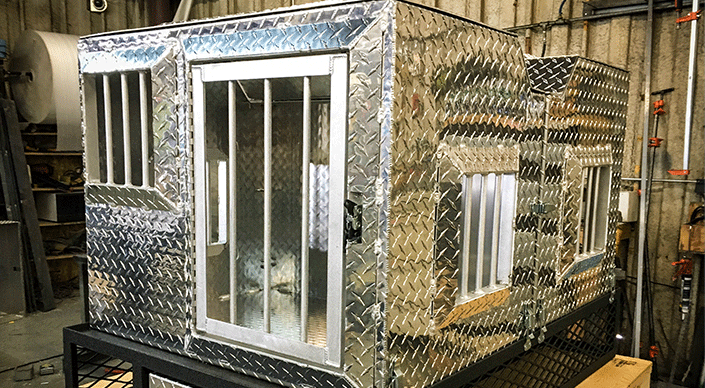
K9 kennel

Running a K‑9 unit means you’re already working with tight quarters. Your four-legged partner needs a safe, comfortable kennel that takes up a good chunk of your vehicle’s rear space, and that’s non-negotiable. But here’s the reality: You’ve still got weapons to secure, evidence to protect, and gear to organize, all without turning your rig into a cramped mess or compromising anyone’s safety.

The good news? With the right police K-9 equipment for vehicle storage (think customized inserts, locking drawers, and slideout platforms), you can make every square inch count. Let’s walk through how to build a setup that serves both your operational needs and your partner’s welfare.

Space Analysis: What’s Left After the Kennel?

Once you’ve bolted in a proper K‑9 cage, you’re looking at what’s left. In most SUVs and trucks, K-9 cages for police vehicles claim a solid amount of the cargo area or rear cabin. Depending on the size of your dog and whether you’re running a single or dual-dog unit, that kennel might stretch from just behind the front seats clear back to the tailgate.

What remains is usually the space beneath the kennel, narrow side channels, and whatever floor area isn’t blocked by the cage structure itself. If your vehicle doubles as prisoner transport, you’re juggling even more constraints: prisoner barriers, safety partitions, and secure seating all compete for real estate. 

The trick with police K-9 inserts is planning your layout around both the dog’s comfort and your need to reach critical gear fast when the call comes in.

Integrating Compact Locking Drawers Without Compromising the Kennel

Weapon storage in K‑9 vehicles requires a balance: secure enough to meet department policy and accessible enough that you’re not fumbling with locks in a high-pressure moment. Compact locking drawers are your friend here, and they can be mounted in several spots depending on your vehicle’s layout.

Underneath the kennel is prime territory if your cage sits high enough off the floor. Low-profile drawers tucked in this space can hold handguns, tasers, or even a patrol rifle broken down. To the side of the kennel, you might fit narrow pull-out drawers that hug the wheel wells or interior panels. If your setup allows, rear slideout drawers that extend past the tailgate give you full access without crawling into the vehicle.

When it comes to hardware, you’ve got choices. Paddle latches are solid for rapid access. One flip and you’re in. Slam-locks are even faster if you’re constantly opening and closing drawers; they latch automatically when you push them shut. Either way, the goal is to keep weapons and dog gear in distinct zones so there’s no confusion, no cross-contamination, and no risk of your partner getting into something they shouldn’t.

Evidence Storage in Multi-Use Vehicles

Evidence handling in police K‑9 vehicles adds another layer of complications. You need secure, compact storage that protects the chain of custody while fitting into whatever space the kennel didn’t claim. Lockable evidence boxes with slam-latch drawers are a smart move.

Chain-of-custody integrity matters, especially when you’re transporting narcotics, paraphernalia, or biological samples. Look for drawers with durable, non-absorbent materials that can be wiped down and sanitized between uses.

Key features to look for in an evidence drawer system:

  • Lockable with keyed or combo entry to prevent tampering and maintain security protocols
  • Interior partitions to separate narcotics, paraphernalia, or biohazards so nothing contaminates anything else during transport
  • Durable, non-absorbent materials for easy cleaning because evidence work gets messy, and your drawers need to hold up shift after shift

Enhancing Access with Slideout Platforms

Here’s where Extendobed’s heritage really shines. Slideout platforms with 100%+ extension capability mean you can reach everything in your vehicle without climbing in or straining your back. When the drawer rolls all the way out, you’ve got full access.

These slideouts aren’t just for drawers, either. They serve as a mounting base for evidence lockers, modular accessories, and custom-designed police K-9 inserts. You can build a rear slideout system that sits beneath the kennel and extends past the tailgate, giving you a stable platform to work from. Some handlers even run dual-direction slides for side access, which is clutch when you’re parked in tight spots or working on uneven ground.

The beauty of a good slideout is simple: It brings the work to you instead of making you go hunting for it.

Safety, Comfort, and Cross-Contamination Concerns

Your dog’s riding right there in the back, which means every choice you make about storage affects their comfort and safety. Noisy latches, rattling hardware, and vibrating drawers can stress a dog out over time. That’s why selecting quiet latching mechanisms and smooth-sliding hardware matters more than you might think.

Cross-contamination is another serious concern. You don’t want your partner’s PPE stored anywhere near seized narcotics or firearms. Working dogs have incredibly sensitive noses, and even trace amounts of certain substances can cause issues. Plus, volatile materials stored near air vents or kennel walls can pose a health hazard for your dog.

Thermal considerations matter too. Drawers mounted directly against kennel walls can trap heat or block airflow, which is the last thing you need on a summer day when your partner’s already dealing with their own body heat and a fur coat.

Tips for separating canine gear from evidence and firearms:

  • Store PPE in waterproof bins with lids to keep dog equipment clean, dry, and isolated from contaminated materials.
  • Use separate drawer modules for weapons and canine accessories so there’s never any question about what’s where.
  • Avoid storing volatile substances near air vents or kennel walls to prevent fumes from affecting your partner’s health and comfort.

Staying Modular for Evolving K‑9 Unit Needs

K‑9 operations change. Maybe you’re assigned a second dog. Maybe your department shifts to dual-purpose vehicles that handle both K‑9 and patrol duties. Maybe new tech comes along, and you need to make room without tearing apart your entire setup.

That’s where modular design pays off. Removable bins, adjustable drawers, and platforms that can be configured in different ways that give you flexibility on the job. You’re not locked into one layout forever. When policy changes or your assignment shifts, you can adapt your police K-9 vehicles without starting from scratch.

Planning for future upgrades to your police K-9 vehicle inserts means building smart from the start. Think of your vehicle as a working platform, not a fixed installation.

FAQs

How much storage space typically remains after installing a police K‑9 insert?

It depends on your vehicle and kennel size, but most handlers find they’ve got 30-40% of the original cargo space left after a proper cage goes in. This space includes under-kennel areas, side channels, and sometimes a narrow strip behind the rear seats. The key is using vertical space and smart mounting solutions to maximize what remains.

Are there legal requirements for storing weapons or narcotics in K‑9 units?

Yes, though specifics vary by state, department, and jurisdiction. Check with your department’s legal advisor or a qualified legal professional. 

What features help maintain the chain of custody for evidence in a vehicle setting?

Secure locks with keyed or combination entry are baseline. Look for drawers with tamper-evident seals or features, internal partitions to prevent cross-contamination, and materials that won’t absorb liquids or odors. Documentation logs attached to drawer systems can help, though many departments now use digital tracking.

Can slideout drawers be retrofitted into older police K‑9 vehicles?

Absolutely. Extendobed’s slideout systems are built to fit a wide range of vehicles, including older models already outfitted with K-9 cages for police vehicles. The key is working with a partner who understands what law enforcement professionals need and can custom-fit hardware to your existing setup. 

Built to Serve Both the Dog and the Duty

Getting police K-9 equipment for vehicle storage right isn’t about cramming more stuff into less space. It’s about building a system that respects your partner’s welfare while giving you the organization and security you need to do the job well. 

The departments that get this right don’t settle for off-the-shelf solutions that almost work. They invest in modular, law-enforcement-grade storage designed specifically for the unique demands of K‑9 operations.

Since 1987, Extendobed has built slideout storage systems that deliver all three. Contact us to configure the perfect setup for your K-9 vehicle today. 

Sticky
Comments Off on Weapon and Evidence Storage for K‑9 Units with Limited Space

Preparing for Fire Investigations: Organizing Tools and Gear in a Slideout Unit

December 05, 2025

Preparing for Fire Investigations: Organizing Tools and Gear in a Slideout Unit

extendobed fire unit slideout

Fire scenes don’t wait for you to dig through piles of gear. By the time you’re crawling through that tailgate looking for your thermal imager, evidence is degrading, and your back’s already calling it quits for the day. 

Fire and explosion investigations demand speed, precision, and reliable access to specialized equipment. Every single time you roll up. That’s where a well-configured slideout system does more than just come in handy. It keeps your gear organized, protected, and ready to deploy the second you need it.

Fire Investigator’s Gear Loadout

Let’s be straight about what fire investigators haul around. This isn’t a simple toolkit; it’s a mobile lab that needs to handle everything from documentation to hazmat detection. 

You’ve got cameras (usually a DSLR with an external flash for proper scene documentation), moisture meters for checking water-damage patterns, and infrared thermometers for mapping heat signatures. Add PPE like respirators, gloves, and Tyvek suits to keep you safe in contaminated environments.

Then there’s the physical evidence collection side: tweezers, swabs, sterile containers, and bagging materials for preserving samples. Don’t forget hazard-detection tools: gas meters and thermal imagers that tell you what you’re walking into before it’s too late. Without smart storage, this fire investigator equipment gets buried at the bottom of a truck bed, damaged from rattling around, or flat-out forgotten when you’re in a hurry.

Compartmentalizing Gear with Purpose-Built Slideout Features

Smart fire investigation storage starts with compartmentalizing by function, not just throwing everything in drawers and hoping for the best. Narrow tool racks work perfectly for small instruments and hand tools that need to stay visible and organized. Center partitions let you separate sensitive equipment from hazardous materials, because you definitely don’t want accelerant swabs cozying up next to your electronics.

Labeled drawers make the difference between finding what you need in five seconds versus five frustrating minutes. Sort by category: one drawer for PPE, another for meters and detection tools, a third for evidence kits. Full-extension drawers are non-negotiable because you need to see everything at a glance, not just what’s up front. 

When you pull that drawer all the way out, every tool should be visible and within reach.

Securing Evidence with Locking Drawers and Evidence Boxes

Chain of custody is the foundation of every fire investigation that’ll hold up in court. Locking drawers provide the security you need to protect evidence from tampering or accidental contamination during transport. Integrated evidence boxes take this further by creating dedicated compartments specifically designed for storing collected samples and materials.

For departments dealing with explosion-related investigations, optional ATF-compliant day boxes provide the added security and documentation requirements those cases demand.

Items That Need Secure Slideout Storage:

  • Firearms and ammunition
  • Explosive residues or accelerant samples
  • Scene documentation (photos, notes)
  • Digital media devices
  • Labeled evidence bags and containers

Locking storage makes sure everything stays secure during transit and on scene.

The goal is simple: When you lock that drawer, you know the evidence inside stays protected and the chain of custody remains unbroken. That peace of mind matters when cases go to court.

Stabilizing Gear with Containment Cages and Binned Storage

A slideout system is only as good as its ability to keep gear in place when you’re hauling down rough roads or backing into tight scene locations. Containment cages prevent equipment from shifting in transit, which protects both your tools and your investment. These cages work especially well for bulkier items that might otherwise turn into projectiles on a hard turn.

Inside drawers, modular bins and dividers create dedicated spaces for specific items. It isn’t just about organization: it’s about securing liquids (like collection reagents), sharps (sampling tools), and fragile equipment (meters and sensors) inside protective enclosures. 

When everything has its spot and stays put, you’re not dealing with broken equipment or spilled chemicals at the worst possible time.

Optimizing Workflow with Built-In Work Surfaces

Sometimes the scene doesn’t give you a clean place to work, and that tailgate’s already covered in soot. Flip-down or pull-out tables built into your slideout system provide a stable surface for field notetaking right at your fire investigator vehicle. 

Integrated work surfaces are perfect for labeling evidence bags, filling out chain-of-custody forms, or organizing documentation without hunting for a flat spot or balancing paperwork on your dashboard like some kind of circus act.

These surfaces are practical and necessary. When you’re in the field and need to document findings or prep samples properly, having a dedicated workspace attached to your fire investigator truck saves time and reduces errors. It’s one less thing to improvise when the job demands your full attention.

Customizing Slideouts for Different Vehicle Types

Not every fire investigation unit runs the same type of rig, and your slideout configuration should match your vehicle’s layout. SUV setups face tighter space constraints, which means vertical storage solutions and multi-level platforms make better use of limited square footage. 

You’re working with height instead of length. Think skyscraper, not ranch house.

Pickup truck beds offer more room for longer drawer systems and side-access trays that can extend well beyond the tailgate. The choice between multi-level and single-plane configurations comes down to crew size and tool load.

Solo investigators might prefer everything on one accessible level, while teams benefit from separated platforms that let multiple people access different gear simultaneously without playing bumper cars.

Speeding Up Access with Smart Labeling and Layouts

Speed on scene often comes down to muscle memory and visual cues. Label drawers and bins clearly by tool category or task type so anyone on your team can find what they need without playing twenty questions. Labeling is especially critical for multi-investigator teams or when you’re training new personnel who don’t yet know your system by heart.

Organize by response flow: The gear you use first should live in the easiest-to-reach compartments. PPE and initial assessment tools up front, specialized evidence collection deeper in the system. Color-coded or pre-numbered drawers keep things consistent across multiple vehicles, which matters when you’re running mutual aid calls or working with different fire investigator trucks throughout the week.

FAQs

Are there slideout configurations that allow multiple investigators to work from the same vehicle?

Absolutely. Multi-access configurations with side-entry and rear-entry options let multiple investigators pull gear simultaneously without blocking each other. The key is designing drawer placement so that commonly used items are accessible from multiple angles and using multi-level platforms that separate work zones. Some departments set up shared workspace drawers in the center with individual task-specific storage on the sides.

How do slideout units support night or low-light investigations?

Fire scenes often happen after dark, and slideout systems can integrate lighting solutions that make a real difference. Built-in LED strips along drawer edges or under platforms provide targeted illumination exactly where you need it. The layout itself matters too. Full-extension drawers and light-colored interiors maximize visibility even in low-light conditions. Some units include rechargeable work lights mounted directly to the slideout frame.

How does using a slideout system reduce physical strain or injury for investigators?

The ergonomic benefits are huge. You’re not climbing into truck beds, overreaching into deep compartments, or lifting heavy equipment from awkward positions anymore. Everything slides out to you at waist or chest height, eliminating the repetitive bending, lifting, and twisting that can lead to back injuries over time. For investigators working multiple scenes per week, that reduction in physical strain adds up to a longer, healthier career.

Can slideouts be designed to separate “clean” and “dirty” zones for contamination control?

Yes, and this matters for fire investigations involving hazardous materials or contaminated evidence. Center partitions and dedicated compartments create physical separation between clean PPE/documentation areas and dirty zones where contaminated samples or gear are stored. Some configurations use separate drawer banks on opposite sides of the unit, or vertical separation with clean storage on upper levels and contaminated materials below. This design approach protects evidence integrity and reduces the risk of cross-contamination.

Set Up for Success at Every Fire Scene

Here’s the bottom line: A well-configured slideout system saves time, protects evidence, and keeps you working strong scene after scene. The right setup means every piece of fire investigator equipment has a home, and you can access what you need without a second thought. 

That’s how the job should work.

Extendobed’s been building slideout systems since 1987, and we’ve learned a few things about what fire investigators actually need versus what looks good in a catalog. If you’re tired of fighting with your storage system when you should be focused on the investigation, it’s worth a conversation. Contact Extendobed to explore fire investigation slideout units built to make your job easier.

Sticky

How to Outfit a K9 Vehicle For Safety and Efficiency

September 30, 2025

k9 police vehicle

When you’re setting up a K9 police vehicle, you’ve got a partner in the back who depends on you for every mile, and a job that doesn’t leave much room for mistakes. So, it’s important you build a rig to match.

From the kennel to the tailgate, every detail matters. The right setup keeps your dog safe, your gear organized, and your vehicle working like a trusted tool. Learn where to put the kennel, how to keep your four-legged partner and a passenger safe, and smart ways to store your gear. Build it right, and your K9 vehicle becomes part of the team.

Kennel Placement: Secure and Dog-Friendly

The kennel is the heart of any K9 police vehicle. It’s where your partner rides, rests, and stays safe between calls, so getting it right isn’t negotiable. A good setup protects them in traffic, keeps them comfortable on the road, and makes your job easier when it’s time to load in or deploy.

Most use a purpose-built K9 insert or kennel that bolts into the vehicle, like an Extendobed stationary kennel. In an SUV, that usually means removing the rear seats or using the cargo area. 

An SUV’s cargo door or back door sits lower than a pickup bed, and that’s one big reason SUVs are the go-to for most K9 units. The less jumping on the floor and climbing your partner has to do, the better — especially after a long shift in the field.

If you’re running a dual-dog unit or working with a large breed, make sure the kennel’s got room for them to stand up, turn around, and stretch without blocking your visibility. Small touches like a rubber mat or a bit of padding make the ride more comfortable and can be pulled out for a quick wash, because wet dogs and mud are just part of the job. 

Climate Control: Keeping Your K9 Cool (or Warm)

Anyone who’s worked a K9 unit in summer knows that feeling when you step out of the car and the heat hits you like a wall. Now imagine sitting in that with a full fur coat. Heat exhaustion is a serious issue for police dogs. 

While most K9 law enforcement units come equipped with an alarm system to detect rising temperatures in the vehicle, there are further steps you can take to make sure they’re comfortable: 

  • Make sure the kennel gets the same A/C and heat you do: Make sure your K9 compartment gets direct A/C and heat output.
  • Add ventilation aids: Window guards, rear-door fans, and vented kennel panels keep fresh air moving even when parked.
  • Insulate the kennel: Foam-lined panels help maintain temperature in both hot and cold weather, and can cut down on noise stress.

Good climate control just makes the day easier on the K9 officers and their handlers. With steady airflow, a bit of insulation, and the right backup in place, your partner can ride in comfort no matter what’s happening outside. It’s one of those small things that pays off every single shift.

Maximizing Gear Storage in a K9 Police Vehicle

K9 units carry a lot of gear. Beyond the usual law enforcement equipment, you’ve got all the dog’s leashes, harnesses, muzzles, first aid supplies (for both of you), possibly specialized sensors or cameras, and maybe even training aids like bite sleeves. 

Consider these storage tips for your K9 police vehicle:

  • Prioritize daily essentials: Keep leashes, harnesses, water bowls, and reward toys up front or on top where you can grab them without thinking.
  • Use K9 vehicle inserts for built-in storage: Many inserts include lockers, drawers, or other accessories beneath or beside the kennel. Perfect for food, medical kits, or extra collars.
  • Work your vertical space: If your kennel’s raised, put a pull-out drawer underneath to hold smaller, high-value items you want close at hand.

The more organized your K9 rig is, the faster you can move when the call comes in. Every leash, collar, and piece equipment should have its place so you’re not wasting time digging through gear. Get the storage right, and your truck or SUV becomes a well-oiled tool that helps you and your partner work smarter and stay ready for whatever’s next.

Slideout Drawers: Your New Best Friend

Slideout drawers are a game-changer for storing heavy or bulky equipment. Instead of crawling into the back of an SUV or reaching over a tailgate to dig for a case of evidence tools, you just pull a handle, and the entire drawer comes out to you. 

In fact, heavy-duty units, like Extendobed’s truck bed dog kennel slideout slide over the tailgate so you can access every crate and all of your equipment without climbing into the bed. Each kennel keeps dogs separated, with removable walls so you can adjust the setup as needed. Air vents keep the airflow moving, and a built-in storage area gives you space for leashes, medical kits, and other gear.

Whether you’re in animal control, law enforcement, or search and rescue, many police K9 vehicle kennels can be built with this included. Giving you a rugged, no-nonsense solution that protects your dogs and makes the handler’s job easier.

The Difference Between Stalling and Responding

A solidly outfitted K9 vehicle is a lifeline for you and your dog. Every decision, from where you mount the kennel to how you store your gear, impacts how quickly you can respond and how safely your partner rides. Build it right and you’ll have a rig that works as hard as you do: secure, organized, and built for the long haul.

Out on the road, there’s no room for guesswork. When the call comes in, you want to know your gear’s ready, your dog’s comfortable, and the whole setup will hold up shift after shift. Outfit your K9 vehicle with the same pride and grit you bring to the job, and it’ll never let you down.

Sticky
Comments Off on How to Outfit a K9 Vehicle For Safety and Efficiency
Secret Link