Made in the USA

MANUFACTURED IN THE USA

(800) 752-0706

Chat With Our Team

Search
Made in the USA

MANUFACTURED IN THE USA

Custom Storage Solutions for SWAT and Bomb‑Squad Vehicles

December 19, 2025

Custom Storage Solutions for SWAT and Bomb‑Squad Vehicles

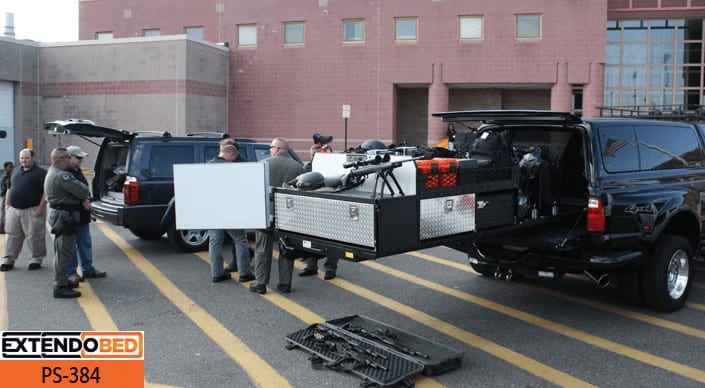
Extendobed SWAT slideout with SWAT standing around

When seconds separate success from disaster, you don’t get to fumble through a disorganized truck bed hunting for the right tool. SWAT and bomb-squad missions operate on a different clock than regular patrol work: there’s no margin for error, no time to improvise, and absolutely zero tolerance for faulty equipment.

It’s about building a platform that moves as fast as your team does, secures gear that could end lives if mishandled, and stands up to the punishment that comes with rapid deployment and rough terrain. Custom SWAT vehicle storage solutions are the difference between “mission complete” and “mission-compromised”.

Mission-Critical Equipment and Why Off-the-Shelf Doesn’t Cut It

Walk through a typical SWAT or bomb-squad loadout, and you’ll understand why generic storage falls apart. 

Ballistic shields weighing 40-plus pounds need reinforced mounting that won’t shift during high-speed driving. Entry tools, breaching charges, and explosives-handling gear require secure, separated compartments that meet federal standards. Robot systems come with deployment ramps, remote controls, and battery packs that need quick access without exposing operators to unnecessary risk.

Then there’s the firearms: rifles, shotguns, handguns, and enough ammunition to sustain operations when backup’s 20 minutes out. Throw in specialized PPE, less-lethal equipment, and communication gear, and you’re looking at thousands of pounds of load-critical equipment that needs to be accessible in seconds.

Off-the-shelf storage isn’t up to the job. Weight ratings are guesswork, access points are in the wrong places, and security features can’t handle the demands of transporting firearms and explosives under ATF regulations.

Secure Storage for Firearms and Tactical Gear

Heavy-duty locking drawers keep long guns, sidearms, and munitions secured during transport and instantly accessible when you hit the ground. Custom compartments sized specifically for ballistic shields, plate carriers, and less-lethal equipment prevent shifting during rapid driving or off-road conditions.

For firearms storage, integrated rifle racks and a gun safe keep weapons separated and protected, with foam inserts custom-cut to each weapon’s profile. The goal isn’t just security, it’s speed. Heavy-duty locking drawers integrate seamlessly with a tactical truck slideout system for maximum accessibility.

When you’re pulling guns from a rack under pressure, every second saved by smart organization is one more second you’re ahead of the problem.

ATF-Compliant Storage for Explosives and Hazardous Materials

For bomb squad trucks, methods for transporting explosives are highly regulated, and for good reason. ATF Type III day boxes meet strict requirements for temporary, attended storage of explosive materials during transit. 

These units can be integrated into slideout platforms or built directly into compartmentalized storage, depending on your vehicle type and mission profile.

Key features of an ATF-compliant Type III day box:

  • One steel padlock with at least five tumblers and a case-hardened shackle of at least 3/8-inch diameter
  • 12-gauge steel construction lined with plywood or Masonite-type hardboard
  • Labeled compartments for safe separation of different materials
  • Built-in tie-down or mounting brackets to prevent shifting during transport

Slideout Systems and Ramp Integration for Robot Deployment

Bomb-disposal robots are expensive, fragile, and absolutely critical when you’re dealing with suspected IEDs. A tactical truck slideout streamlines robot storage and deployment, bringing the robot to you instead of forcing operators to climb into truck beds or cargo areas under time pressure. Ramp integration allows for fast, controlled offloading in field conditions.

Design considerations matter here: tray length needs to accommodate the robot’s full wheelbase, ramp angle has to be shallow enough for safe deployment, and grip surfaces prevent slipping on wet or muddy ground.

When you’re deploying a $100,000 piece of equipment in a high-stress environment, the last thing you need is a ramp failure or a platform that doesn’t extend far enough.

Supporting On-Site Planning with Built-In Workspace Features

Tactical operations don’t stop when you arrive on scene. They shift into a different phase that requires communication, coordination, real-time decision-making, and a mobile command center. Fold-down tables provide workspace for report writing, mission briefings, or reviewing floor plans while maintaining operational security.

Dry-erase or magnetic command boards mounted inside drawer fronts or on vehicle panels let teams track movements, assignments, and timelines without relying on paper that blows away or gets soaked.

Pull-out shelves give you a stable surface for maps, reference materials, or laptop setups during long deployments.

Matching Configurations to Vehicle Type and Load Capacity

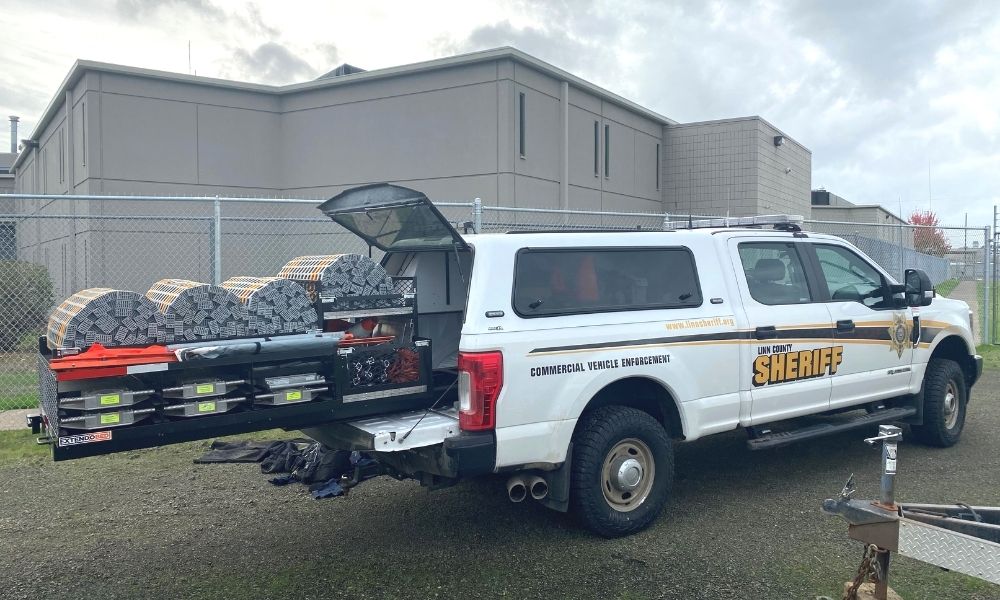
Platform choice matters. Pickup trucks are a natural fit for SWAT team trucks, with slideout beds, like those Extendobed manufactures, delivering weight capacities from 1,200 to 3,000 pounds and over 100% extension for complete bed access. The beauty of a tactical truck slideout is the ability to maximize both horizontal reach and vertical space.

SUVs work well for teams prioritizing vertical space: modular drawer stacks let you build storage upward instead of outward. Vans and box trucks offer the most interior volume for bomb squad trucks or multi-role teams that need large-scale setups with room for robots, disposal equipment, and command infrastructure.

Weight considerations can’t be ignored. Drawer ratings need to match your heaviest gear, axle load limits determine how much total weight your vehicle can safely carry, and ramp strength affects whether you can deploy robots or heavy equipment without structural failure.

Factors to evaluate when choosing your SWAT or bomb-squad vehicle platform:

  • Payload capacity: Total weight your vehicle can carry without exceeding GVWR
  • Interior vertical clearance: Height available for stacked storage or standing workspace
  • Power access and lighting: Electrical infrastructure for charging equipment or operating command systems
  • Team size and deployment speed: How many operators need simultaneous access to gear

FAQs

What are the ATF storage requirements for transporting explosives?

The ATF requires explosives being transported to be secured in appropriate magazines. For temporary attended transport, Type III day boxes are commonly used and must be constructed of 12-gauge steel lined with plywood or Masonite-type hardboard, secured with one steel padlock having at least five tumblers and a case-hardened shackle of at least 3/8-inch diameter. Visit the ATF website or contact a legal professional for more information. 

How do bomb-squad vehicles safely store and deploy robot systems?

Slideout platforms with integrated ramps provide controlled deployment without requiring operators to lift heavy robots. The platform extends beyond the tailgate, and a shallow-angle ramp with grip surfaces allows the robot to roll safely to the ground. Storage compartments keep batteries, controllers, and accessories organized for rapid setup.

Which custom storage features help maintain readiness during high-stress missions?

Locking drawers for firearms and ammunition, reinforced compartments for shields and entry tools, integrated workspace features like fold-down tables, and quick-access drawer systems that eliminate digging through piles of gear. Every feature focuses on speed, security, and preventing equipment failure under pressure.

Can tactical slideout systems be retrofitted into existing vehicles?

Yes. Extendobed and similar manufacturers offer custom-built slideout systems designed to fit specific vehicle makes and models, including retrofits for existing tactical units. Installation typically involves mounting rails or brackets to the vehicle bed or cargo area, then securing the slideout platform in accordance with weight ratings and deployment requirements.

Do SWAT teams prefer fixed weapon storage or modular configurations?

Most teams favor modular configurations that adapt to changing mission requirements and equipment upgrades. Fixed storage works for departments with standardized loadouts that rarely change, but modular systems with adjustable gun racks, removable dividers, and reconfigurable drawer layouts offer flexibility as gear evolves or mission profiles shift.

Built for Speed, Safety, and Tactical Precision

Here’s the deal: when you’re running hot to a barricaded suspect or responding to a suspected IED, your vehicle either works with you or against you. A well-configured rig makes the difference between hands-on target in 30 seconds and two minutes of being a sitting duck.

If your current setup is costing you time, it’s costing you more than you think. Contact Extendobed, and let’s build something that keeps you ready for the mission.

Sticky

Weapon and Evidence Storage for K‑9 Units with Limited Space

December 10, 2025

Weapon and Evidence Storage for K‑9 Units with Limited Space

K9 kennel

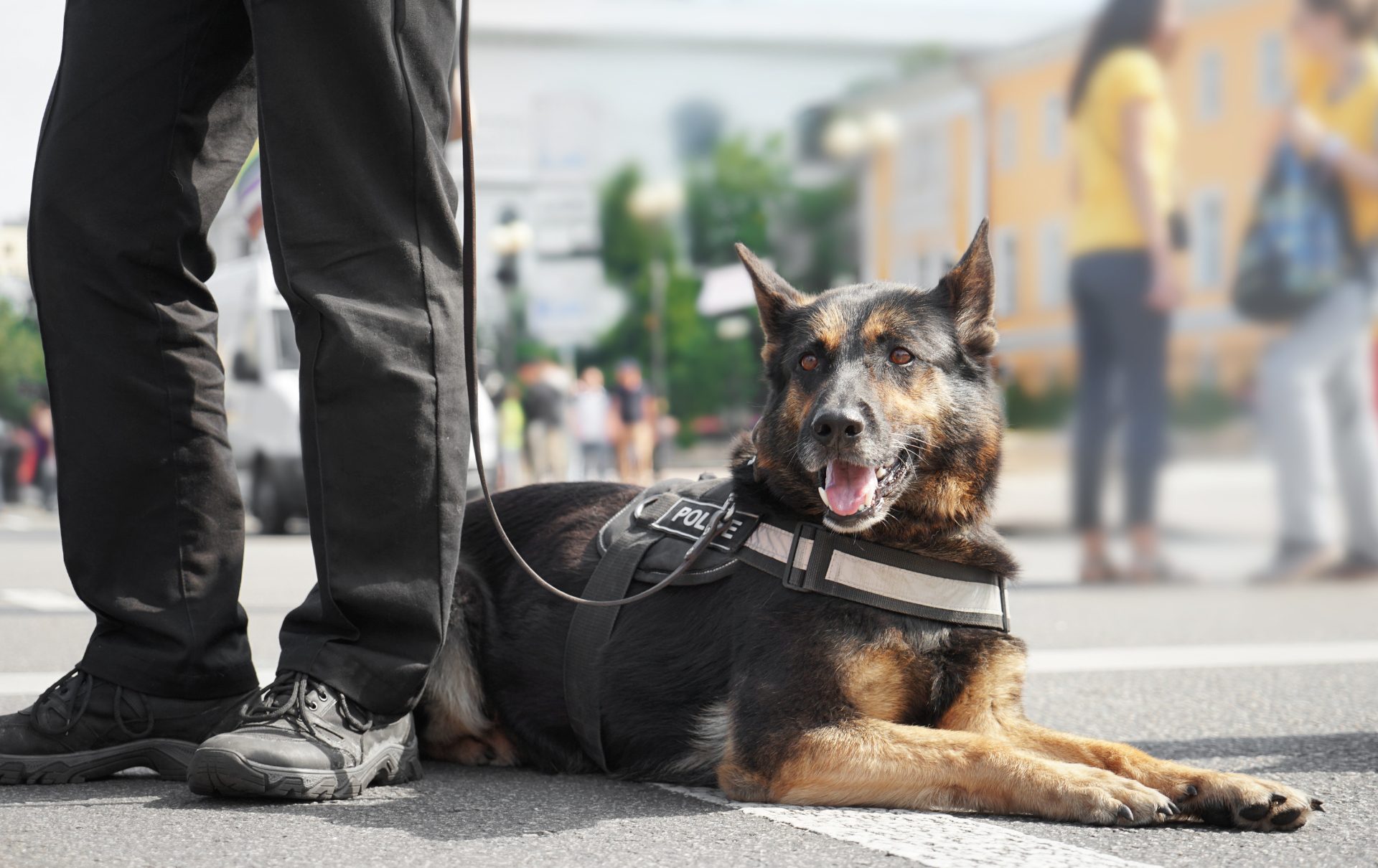
Running a K‑9 unit means you’re already working with tight quarters. Your four-legged partner needs a safe, comfortable kennel that takes up a good chunk of your vehicle’s rear space, and that’s non-negotiable. But here’s the reality: You’ve still got weapons to secure, evidence to protect, and gear to organize, all without turning your rig into a cramped mess or compromising anyone’s safety.

The good news? With the right police K-9 equipment for vehicle storage (think customized inserts, locking drawers, and slideout platforms), you can make every square inch count. Let’s walk through how to build a setup that serves both your operational needs and your partner’s welfare.

Space Analysis: What’s Left After the Kennel?

Once you’ve bolted in a proper K‑9 cage, you’re looking at what’s left. In most SUVs and trucks, K-9 cages for police vehicles claim a solid amount of the cargo area or rear cabin. Depending on the size of your dog and whether you’re running a single or dual-dog unit, that kennel might stretch from just behind the front seats clear back to the tailgate.

What remains is usually the space beneath the kennel, narrow side channels, and whatever floor area isn’t blocked by the cage structure itself. If your vehicle doubles as prisoner transport, you’re juggling even more constraints: prisoner barriers, safety partitions, and secure seating all compete for real estate. 

The trick with police K-9 inserts is planning your layout around both the dog’s comfort and your need to reach critical gear fast when the call comes in.

Integrating Compact Locking Drawers Without Compromising the Kennel

Weapon storage in K‑9 vehicles requires a balance: secure enough to meet department policy and accessible enough that you’re not fumbling with locks in a high-pressure moment. Compact locking drawers are your friend here, and they can be mounted in several spots depending on your vehicle’s layout.

Underneath the kennel is prime territory if your cage sits high enough off the floor. Low-profile drawers tucked in this space can hold handguns, tasers, or even a patrol rifle broken down. To the side of the kennel, you might fit narrow pull-out drawers that hug the wheel wells or interior panels. If your setup allows, rear slideout drawers that extend past the tailgate give you full access without crawling into the vehicle.

When it comes to hardware, you’ve got choices. Paddle latches are solid for rapid access. One flip and you’re in. Slam-locks are even faster if you’re constantly opening and closing drawers; they latch automatically when you push them shut. Either way, the goal is to keep weapons and dog gear in distinct zones so there’s no confusion, no cross-contamination, and no risk of your partner getting into something they shouldn’t.

Evidence Storage in Multi-Use Vehicles

Evidence handling in police K‑9 vehicles adds another layer of complications. You need secure, compact storage that protects the chain of custody while fitting into whatever space the kennel didn’t claim. Lockable evidence boxes with slam-latch drawers are a smart move.

Chain-of-custody integrity matters, especially when you’re transporting narcotics, paraphernalia, or biological samples. Look for drawers with durable, non-absorbent materials that can be wiped down and sanitized between uses.

Key features to look for in an evidence drawer system:

  • Lockable with keyed or combo entry to prevent tampering and maintain security protocols
  • Interior partitions to separate narcotics, paraphernalia, or biohazards so nothing contaminates anything else during transport
  • Durable, non-absorbent materials for easy cleaning because evidence work gets messy, and your drawers need to hold up shift after shift

Enhancing Access with Slideout Platforms

Here’s where Extendobed’s heritage really shines. Slideout platforms with 100%+ extension capability mean you can reach everything in your vehicle without climbing in or straining your back. When the drawer rolls all the way out, you’ve got full access.

These slideouts aren’t just for drawers, either. They serve as a mounting base for evidence lockers, modular accessories, and custom-designed police K-9 inserts. You can build a rear slideout system that sits beneath the kennel and extends past the tailgate, giving you a stable platform to work from. Some handlers even run dual-direction slides for side access, which is clutch when you’re parked in tight spots or working on uneven ground.

The beauty of a good slideout is simple: It brings the work to you instead of making you go hunting for it.

Safety, Comfort, and Cross-Contamination Concerns

Your dog’s riding right there in the back, which means every choice you make about storage affects their comfort and safety. Noisy latches, rattling hardware, and vibrating drawers can stress a dog out over time. That’s why selecting quiet latching mechanisms and smooth-sliding hardware matters more than you might think.

Cross-contamination is another serious concern. You don’t want your partner’s PPE stored anywhere near seized narcotics or firearms. Working dogs have incredibly sensitive noses, and even trace amounts of certain substances can cause issues. Plus, volatile materials stored near air vents or kennel walls can pose a health hazard for your dog.

Thermal considerations matter too. Drawers mounted directly against kennel walls can trap heat or block airflow, which is the last thing you need on a summer day when your partner’s already dealing with their own body heat and a fur coat.

Tips for separating canine gear from evidence and firearms:

  • Store PPE in waterproof bins with lids to keep dog equipment clean, dry, and isolated from contaminated materials.
  • Use separate drawer modules for weapons and canine accessories so there’s never any question about what’s where.
  • Avoid storing volatile substances near air vents or kennel walls to prevent fumes from affecting your partner’s health and comfort.

Staying Modular for Evolving K‑9 Unit Needs

K‑9 operations change. Maybe you’re assigned a second dog. Maybe your department shifts to dual-purpose vehicles that handle both K‑9 and patrol duties. Maybe new tech comes along, and you need to make room without tearing apart your entire setup.

That’s where modular design pays off. Removable bins, adjustable drawers, and platforms that can be configured in different ways that give you flexibility on the job. You’re not locked into one layout forever. When policy changes or your assignment shifts, you can adapt your police K-9 vehicles without starting from scratch.

Planning for future upgrades to your police K-9 vehicle inserts means building smart from the start. Think of your vehicle as a working platform, not a fixed installation.

FAQs

How much storage space typically remains after installing a police K‑9 insert?

It depends on your vehicle and kennel size, but most handlers find they’ve got 30-40% of the original cargo space left after a proper cage goes in. This space includes under-kennel areas, side channels, and sometimes a narrow strip behind the rear seats. The key is using vertical space and smart mounting solutions to maximize what remains.

Are there legal requirements for storing weapons or narcotics in K‑9 units?

Yes, though specifics vary by state, department, and jurisdiction. Check with your department’s legal advisor or a qualified legal professional. 

What features help maintain the chain of custody for evidence in a vehicle setting?

Secure locks with keyed or combination entry are baseline. Look for drawers with tamper-evident seals or features, internal partitions to prevent cross-contamination, and materials that won’t absorb liquids or odors. Documentation logs attached to drawer systems can help, though many departments now use digital tracking.

Can slideout drawers be retrofitted into older police K‑9 vehicles?

Absolutely. Extendobed’s slideout systems are built to fit a wide range of vehicles, including older models already outfitted with K-9 cages for police vehicles. The key is working with a partner who understands what law enforcement professionals need and can custom-fit hardware to your existing setup. 

Built to Serve Both the Dog and the Duty

Getting police K-9 equipment for vehicle storage right isn’t about cramming more stuff into less space. It’s about building a system that respects your partner’s welfare while giving you the organization and security you need to do the job well. 

The departments that get this right don’t settle for off-the-shelf solutions that almost work. They invest in modular, law-enforcement-grade storage designed specifically for the unique demands of K‑9 operations.

Since 1987, Extendobed has built slideout storage systems that deliver all three. Contact us to configure the perfect setup for your K-9 vehicle today. 

Sticky

Preparing for Fire Investigations: Organizing Tools and Gear in a Slideout Unit

December 05, 2025

Preparing for Fire Investigations: Organizing Tools and Gear in a Slideout Unit

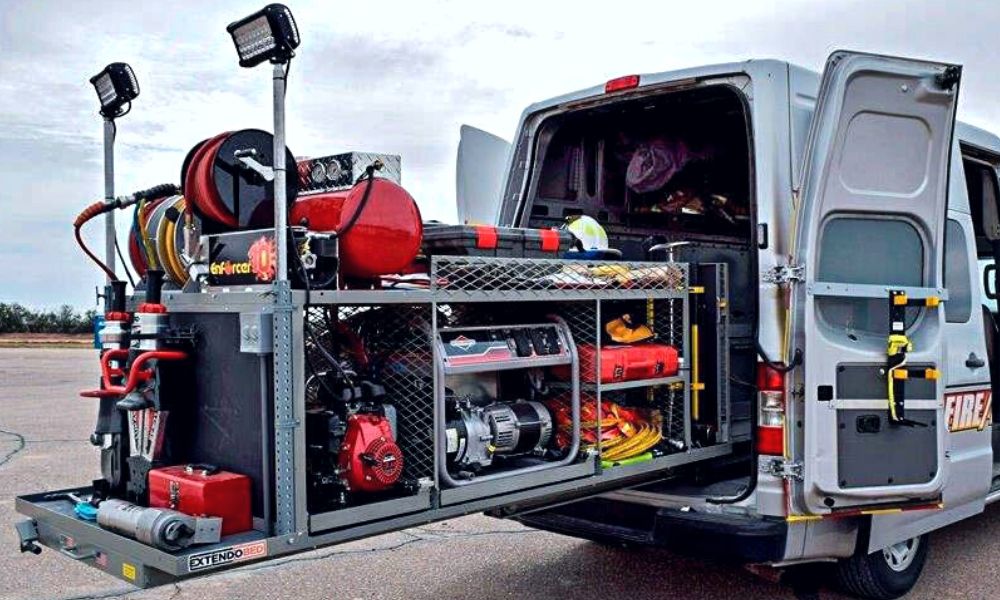
extendobed fire unit slideout

Fire scenes don’t wait for you to dig through piles of gear. By the time you’re crawling through that tailgate looking for your thermal imager, evidence is degrading, and your back’s already calling it quits for the day. 

Fire and explosion investigations demand speed, precision, and reliable access to specialized equipment. Every single time you roll up. That’s where a well-configured slideout system does more than just come in handy. It keeps your gear organized, protected, and ready to deploy the second you need it.

Fire Investigator’s Gear Loadout

Let’s be straight about what fire investigators haul around. This isn’t a simple toolkit; it’s a mobile lab that needs to handle everything from documentation to hazmat detection. 

You’ve got cameras (usually a DSLR with an external flash for proper scene documentation), moisture meters for checking water-damage patterns, and infrared thermometers for mapping heat signatures. Add PPE like respirators, gloves, and Tyvek suits to keep you safe in contaminated environments.

Then there’s the physical evidence collection side: tweezers, swabs, sterile containers, and bagging materials for preserving samples. Don’t forget hazard-detection tools: gas meters and thermal imagers that tell you what you’re walking into before it’s too late. Without smart storage, this fire investigator equipment gets buried at the bottom of a truck bed, damaged from rattling around, or flat-out forgotten when you’re in a hurry.

Compartmentalizing Gear with Purpose-Built Slideout Features

Smart fire investigation storage starts with compartmentalizing by function, not just throwing everything in drawers and hoping for the best. Narrow tool racks work perfectly for small instruments and hand tools that need to stay visible and organized. Center partitions let you separate sensitive equipment from hazardous materials, because you definitely don’t want accelerant swabs cozying up next to your electronics.

Labeled drawers make the difference between finding what you need in five seconds versus five frustrating minutes. Sort by category: one drawer for PPE, another for meters and detection tools, a third for evidence kits. Full-extension drawers are non-negotiable because you need to see everything at a glance, not just what’s up front. 

When you pull that drawer all the way out, every tool should be visible and within reach.

Securing Evidence with Locking Drawers and Evidence Boxes

Chain of custody is the foundation of every fire investigation that’ll hold up in court. Locking drawers provide the security you need to protect evidence from tampering or accidental contamination during transport. Integrated evidence boxes take this further by creating dedicated compartments specifically designed for storing collected samples and materials.

For departments dealing with explosion-related investigations, optional ATF-compliant day boxes provide the added security and documentation requirements those cases demand.

Items That Need Secure Slideout Storage:

  • Firearms and ammunition
  • Explosive residues or accelerant samples
  • Scene documentation (photos, notes)
  • Digital media devices
  • Labeled evidence bags and containers

Locking storage makes sure everything stays secure during transit and on scene.

The goal is simple: When you lock that drawer, you know the evidence inside stays protected and the chain of custody remains unbroken. That peace of mind matters when cases go to court.

Stabilizing Gear with Containment Cages and Binned Storage

A slideout system is only as good as its ability to keep gear in place when you’re hauling down rough roads or backing into tight scene locations. Containment cages prevent equipment from shifting in transit, which protects both your tools and your investment. These cages work especially well for bulkier items that might otherwise turn into projectiles on a hard turn.

Inside drawers, modular bins and dividers create dedicated spaces for specific items. It isn’t just about organization: it’s about securing liquids (like collection reagents), sharps (sampling tools), and fragile equipment (meters and sensors) inside protective enclosures. 

When everything has its spot and stays put, you’re not dealing with broken equipment or spilled chemicals at the worst possible time.

Optimizing Workflow with Built-In Work Surfaces

Sometimes the scene doesn’t give you a clean place to work, and that tailgate’s already covered in soot. Flip-down or pull-out tables built into your slideout system provide a stable surface for field notetaking right at your fire investigator vehicle. 

Integrated work surfaces are perfect for labeling evidence bags, filling out chain-of-custody forms, or organizing documentation without hunting for a flat spot or balancing paperwork on your dashboard like some kind of circus act.

These surfaces are practical and necessary. When you’re in the field and need to document findings or prep samples properly, having a dedicated workspace attached to your fire investigator truck saves time and reduces errors. It’s one less thing to improvise when the job demands your full attention.

Customizing Slideouts for Different Vehicle Types

Not every fire investigation unit runs the same type of rig, and your slideout configuration should match your vehicle’s layout. SUV setups face tighter space constraints, which means vertical storage solutions and multi-level platforms make better use of limited square footage. 

You’re working with height instead of length. Think skyscraper, not ranch house.

Pickup truck beds offer more room for longer drawer systems and side-access trays that can extend well beyond the tailgate. The choice between multi-level and single-plane configurations comes down to crew size and tool load.

Solo investigators might prefer everything on one accessible level, while teams benefit from separated platforms that let multiple people access different gear simultaneously without playing bumper cars.

Speeding Up Access with Smart Labeling and Layouts

Speed on scene often comes down to muscle memory and visual cues. Label drawers and bins clearly by tool category or task type so anyone on your team can find what they need without playing twenty questions. Labeling is especially critical for multi-investigator teams or when you’re training new personnel who don’t yet know your system by heart.

Organize by response flow: The gear you use first should live in the easiest-to-reach compartments. PPE and initial assessment tools up front, specialized evidence collection deeper in the system. Color-coded or pre-numbered drawers keep things consistent across multiple vehicles, which matters when you’re running mutual aid calls or working with different fire investigator trucks throughout the week.

FAQs

Are there slideout configurations that allow multiple investigators to work from the same vehicle?

Absolutely. Multi-access configurations with side-entry and rear-entry options let multiple investigators pull gear simultaneously without blocking each other. The key is designing drawer placement so that commonly used items are accessible from multiple angles and using multi-level platforms that separate work zones. Some departments set up shared workspace drawers in the center with individual task-specific storage on the sides.

How do slideout units support night or low-light investigations?

Fire scenes often happen after dark, and slideout systems can integrate lighting solutions that make a real difference. Built-in LED strips along drawer edges or under platforms provide targeted illumination exactly where you need it. The layout itself matters too. Full-extension drawers and light-colored interiors maximize visibility even in low-light conditions. Some units include rechargeable work lights mounted directly to the slideout frame.

How does using a slideout system reduce physical strain or injury for investigators?

The ergonomic benefits are huge. You’re not climbing into truck beds, overreaching into deep compartments, or lifting heavy equipment from awkward positions anymore. Everything slides out to you at waist or chest height, eliminating the repetitive bending, lifting, and twisting that can lead to back injuries over time. For investigators working multiple scenes per week, that reduction in physical strain adds up to a longer, healthier career.

Can slideouts be designed to separate “clean” and “dirty” zones for contamination control?

Yes, and this matters for fire investigations involving hazardous materials or contaminated evidence. Center partitions and dedicated compartments create physical separation between clean PPE/documentation areas and dirty zones where contaminated samples or gear are stored. Some configurations use separate drawer banks on opposite sides of the unit, or vertical separation with clean storage on upper levels and contaminated materials below. This design approach protects evidence integrity and reduces the risk of cross-contamination.

Set Up for Success at Every Fire Scene

Here’s the bottom line: A well-configured slideout system saves time, protects evidence, and keeps you working strong scene after scene. The right setup means every piece of fire investigator equipment has a home, and you can access what you need without a second thought. 

That’s how the job should work.

Extendobed’s been building slideout systems since 1987, and we’ve learned a few things about what fire investigators actually need versus what looks good in a catalog. If you’re tired of fighting with your storage system when you should be focused on the investigation, it’s worth a conversation. Contact Extendobed to explore fire investigation slideout units built to make your job easier.

Sticky

How to Outfit a K9 Vehicle For Safety and Efficiency

September 30, 2025

k9 police vehicle

When you’re setting up a K9 police vehicle, you’ve got a partner in the back who depends on you for every mile, and a job that doesn’t leave much room for mistakes. So, it’s important you build a rig to match.

From the kennel to the tailgate, every detail matters. The right setup keeps your dog safe, your gear organized, and your vehicle working like a trusted tool. Learn where to put the kennel, how to keep your four-legged partner and a passenger safe, and smart ways to store your gear. Build it right, and your K9 vehicle becomes part of the team.

Kennel Placement: Secure and Dog-Friendly

The kennel is the heart of any K9 police vehicle. It’s where your partner rides, rests, and stays safe between calls, so getting it right isn’t negotiable. A good setup protects them in traffic, keeps them comfortable on the road, and makes your job easier when it’s time to load in or deploy.

Most use a purpose-built K9 insert or kennel that bolts into the vehicle, like an Extendobed stationary kennel. In an SUV, that usually means removing the rear seats or using the cargo area. 

An SUV’s cargo door or back door sits lower than a pickup bed, and that’s one big reason SUVs are the go-to for most K9 units. The less jumping on the floor and climbing your partner has to do, the better — especially after a long shift in the field.

If you’re running a dual-dog unit or working with a large breed, make sure the kennel’s got room for them to stand up, turn around, and stretch without blocking your visibility. Small touches like a rubber mat or a bit of padding make the ride more comfortable and can be pulled out for a quick wash, because wet dogs and mud are just part of the job. 

Climate Control: Keeping Your K9 Cool (or Warm)

Anyone who’s worked a K9 unit in summer knows that feeling when you step out of the car and the heat hits you like a wall. Now imagine sitting in that with a full fur coat. Heat exhaustion is a serious issue for police dogs. 

While most K9 law enforcement units come equipped with an alarm system to detect rising temperatures in the vehicle, there are further steps you can take to make sure they’re comfortable: 

  • Make sure the kennel gets the same A/C and heat you do: Make sure your K9 compartment gets direct A/C and heat output.
  • Add ventilation aids: Window guards, rear-door fans, and vented kennel panels keep fresh air moving even when parked.
  • Insulate the kennel: Foam-lined panels help maintain temperature in both hot and cold weather, and can cut down on noise stress.

Good climate control just makes the day easier on the K9 officers and their handlers. With steady airflow, a bit of insulation, and the right backup in place, your partner can ride in comfort no matter what’s happening outside. It’s one of those small things that pays off every single shift.

Maximizing Gear Storage in a K9 Police Vehicle

K9 units carry a lot of gear. Beyond the usual law enforcement equipment, you’ve got all the dog’s leashes, harnesses, muzzles, first aid supplies (for both of you), possibly specialized sensors or cameras, and maybe even training aids like bite sleeves. 

Consider these storage tips for your K9 police vehicle:

  • Prioritize daily essentials: Keep leashes, harnesses, water bowls, and reward toys up front or on top where you can grab them without thinking.
  • Use K9 vehicle inserts for built-in storage: Many inserts include lockers, drawers, or other accessories beneath or beside the kennel. Perfect for food, medical kits, or extra collars.
  • Work your vertical space: If your kennel’s raised, put a pull-out drawer underneath to hold smaller, high-value items you want close at hand.

The more organized your K9 rig is, the faster you can move when the call comes in. Every leash, collar, and piece equipment should have its place so you’re not wasting time digging through gear. Get the storage right, and your truck or SUV becomes a well-oiled tool that helps you and your partner work smarter and stay ready for whatever’s next.

Slideout Drawers: Your New Best Friend

Slideout drawers are a game-changer for storing heavy or bulky equipment. Instead of crawling into the back of an SUV or reaching over a tailgate to dig for a case of evidence tools, you just pull a handle, and the entire drawer comes out to you. 

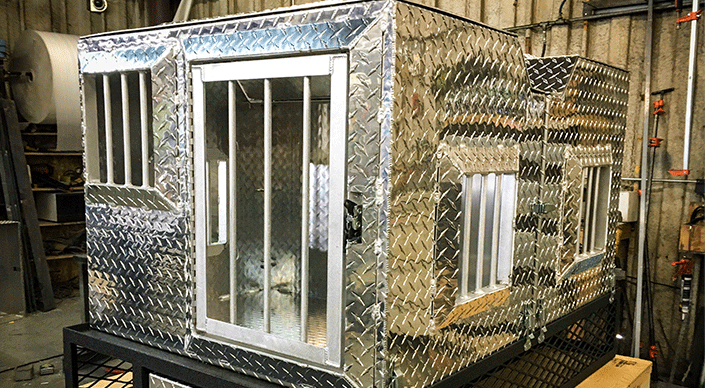
In fact, heavy-duty units, like Extendobed’s truck bed dog kennel slideout slide over the tailgate so you can access every crate and all of your equipment without climbing into the bed. Each kennel keeps dogs separated, with removable walls so you can adjust the setup as needed. Air vents keep the airflow moving, and a built-in storage area gives you space for leashes, medical kits, and other gear.

Whether you’re in animal control, law enforcement, or search and rescue, many police K9 vehicle kennels can be built with this included. Giving you a rugged, no-nonsense solution that protects your dogs and makes the handler’s job easier.

The Difference Between Stalling and Responding

A solidly outfitted K9 vehicle is a lifeline for you and your dog. Every decision, from where you mount the kennel to how you store your gear, impacts how quickly you can respond and how safely your partner rides. Build it right and you’ll have a rig that works as hard as you do: secure, organized, and built for the long haul.

Out on the road, there’s no room for guesswork. When the call comes in, you want to know your gear’s ready, your dog’s comfortable, and the whole setup will hold up shift after shift. Outfit your K9 vehicle with the same pride and grit you bring to the job, and it’ll never let you down.

Sticky

Outfitting Mobile Command Centers for Law‑Enforcement Operations
September 30, 2025

Outfitting Mobile Command Centers for Law‑Enforcement Operations
What Kind of Gear Is Inside a Police Car

If you’re in law enforcement, fire and rescue, or emergency management, you already know the truth: a mobile command vehicle has to pull triple duty. 

It’s a communications hub, a meeting space, and a rolling storage room, all in one package. If it’s not built to work the way your crew does, you’ll feel it the minute things hit the fan.

But when it is built right? That truck becomes the anchor. The place everyone turns when the clock’s working against you. It’s where the comms keep firing, and turns a tough situation into a job handled.

Work Surfaces: Where Plans Take Shape

You can’t run an operation off the hood of a cruiser. That may work in a pinch, but when things heat up, you need steady ground. That’s why the work surfaces inside a mobile command center vehicle matter more than most folks think.

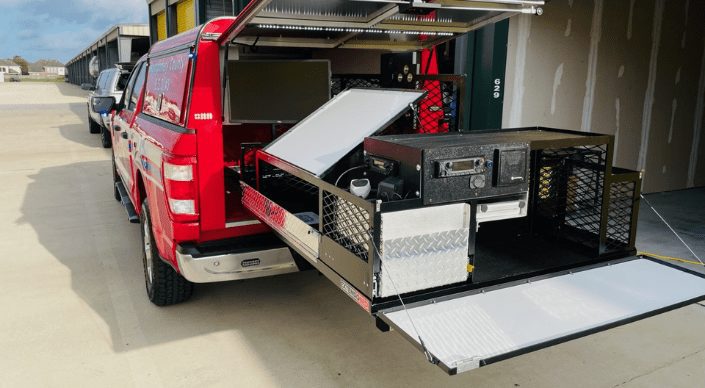
  • Fold-down tables give you space when you need it and fold up when you don’t, keeping the walkways clear.
  • Pop-up writing desks give your crew a spot to jot notes, sign off on paperwork, or work on a laptop without wobbling.
  • Reversible map boards are the playbook. Maps on one side, dry-erase on the other. Flip, mark it up, and keep going.

You can’t make smart calls with a notebook sliding off your knee. A good surface gives your team a place to write it down, draw it up, and keep the plan on track.

Communications: Keeping the Lifeline Open

The success of every mission depends on communication. If the radios go down or the laptops can’t get power, you’re dead in the water. A mobile command truck is first and foremost a communications hub, and everything else comes after. 

Radios, laptops, and network gear all need to ride in one place where they’re safe and easy to grab. Slide-out units built for comms mean no tangled wires, and gear that’s ready the second you reach for it.

Power’s the other half of the fight. A mobile command center vehicle has to keep everything running, whether it’s a half-hour callout or a twelve-hour grind. If the comms stay alive, so does the mission.

Securing Weapons and Sensitive Gear

Out on the job, not everything you carry can sit out in the open. Firearms, evidence, sensitive files. They all need to be locked down. That’s where heavy-duty drawers come in.

A solid mobile working environment comes with locking drawers that hold their ground even when the road’s rough. No rattling, no shifting, no surprise when you slide it open. When you step away from the truck, you know your gear’s right where you left it.

In a mobile command center police unit, security must be forged into the steel. But not every department has to fight the same fight.

Choosing the Right Setup

A small-town crew might only need space for two people and a single map board. A big-city PD could have half a dozen staff working inside at once, which means benches along the sides, multi-level work platforms, and enough outlets to keep every laptop and radio running.

Think about the gear, too. Radios and network equipment take up space and need reliable power. Map boards can be built right into the slide if you want them locked down, or kept portable if your team needs to carry them into the field. Weapons and sensitive files? Those belong in locking drawers, the kind that don’t rattle loose on rough roads and give you peace of mind when you step away from the vehicle.

Answer those questions straight, and you’ll end up with a truck that fits like a glove. Extendobed offers options, multi-level platforms, containment gates, and locking drawers that let you build what you need.

Built for the Work Ahead

A mobile command center can be a dependable ally when the day runs long and the stakes are high. Get it right, and it becomes more than steel and storage. It’s the place where the crew gathers, the plan takes shape, and the gear’s always ready.

When the whole community’s counting on you, you can’t afford a setup that backs down. That’s why Extendobed builds command centers with one goal in mind: to give departments gear they can count on, shift after shift, year after year. 

Ready to Build a Mobile Command Center That Works as Hard as You Do?

A well-outfitted mobile command center isn’t just a convenience — it’s a lifeline when the pressure’s on. From secure storage and smart work surfaces to reliable communication setups, the right build keeps your team focused and your mission moving forward. 

If your department is ready to upgrade or customize a mobile command center that meets the demands of real-world operations, contact Extendobed today. We’ll help you build a solution that works as hard as you do.

Sticky

Choosing the Right Slide-Out for Fire Truck Beds

September 30, 2025

Choosing the Right Slide-Out for Fire Truck Beds

Fire command truck slide-out unit.

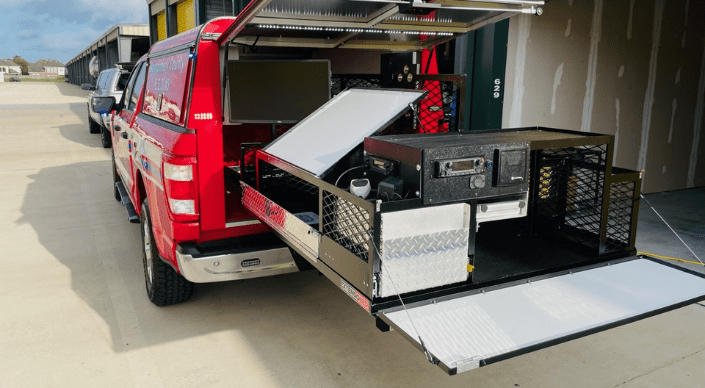
Outfitting a fire command vehicle or rescue truck means picking gear that’ll show up and work just as hard as the crew riding in it. The right slide-out tray or drawer can be a game-changer if you’re hauling heavy equipment. It gives you quick, organized access to everything, from medical kits to the Jaws of Life, right when you need it.

First responders know that every second counts. Slide-out drawers allow you to keep multiple heavy and large items in your vehicle and deploy them at a moment’s notice. But not all slide-outs are built the same.

How do you choose one tough enough for the job?

Types of Fire Department Slide-Outs

First, nail down what kind of equipment you’ll store and how you’ll operate. Slide-out systems generally fall into four rough types: heavy-duty rescue unit trays, first responder slide-outs, fire investigator units, and mobile command center slides. While there’s overlap and each provides easy access they’re both optimized for different roles.

Rescue/Extrication Gear

If you’re hauling extrication tools, hydraulic pumps, cribbing, saws, and medical rescue gear, you need a beefy slide-out with a high weight capacity and simple, rugged design. These heavy-duty slide-outs are rolling platforms that can handle bulky, heavy equipment (often up to 3,000 lbs) without breaking a sweat.

Command and Control Equipment

On the other hand, a fire department command vehicle slide-out is like a mobile office for the fireground. If you’re a Battalion Chief or safety officer setting up a command post, your slide might carry radios, laptops, incident command boards, medical bags, lighting, and maybe a coffee thermos or two. These slides often come with built-in fire command vehicle cabinets, drawers, and electronics mounts to organize smaller equipment.

First Responder Slide-Outs

When seconds matter, first responder slide-outs provide immediate access to lifesaving gear. Built to handle heavy-duty rescue tools like extrication equipment, hydraulic pumps, and medical kits, these units are designed for fast deployment under pressure.

Their rugged construction stands up to the harshest fireground conditions, ensuring firefighters can grab, use, and return gear quickly between calls. For departments responding to vehicle accidents, structural fires, and other high-intensity emergencies, first responder slide-outs keep essential equipment organized, secure, and ready at a moment’s notice.

Fire Investigation Units

After the flames are out, fire investigation units transform a truck into a mobile forensic lab. These slide-outs are optimized for organization, with compartments for cameras, evidence kits, laptops, and reporting tools. Unlike heavy-duty rescue trays, which prioritize sheer load capacity, fire investigation slide-outs emphasize accessibility and separation of sensitive gear.

They keep equipment protected from environmental exposure while providing a clean, efficient workspace for inspectors. Whether documenting fire origins, preserving evidence, or managing case files on-site, these units help investigators perform their duties with accuracy and efficiency. For departments with dedicated fire investigation teams, this slide-out is a practical solution that turns a vehicle into a command-and-control hub tailored to post-incident analysis.

Built to Last: Durability and Maintenance

Firefighters put their equipment through hell and back, and slide-outs are no exception. Off-road brush fires, winter storms, and daily wear-and-tear at the station. Your fire unit needs to handle it all while asking for minimal maintenance.

Here are a few durability pointers:

  • Material and finish: Look for heavy-gauge steel or aluminum construction and a tough finish. Many top slide-outs come with a rugged powder-coat finish that resists corrosion and scratches.
  • Rattle-free design: One complaint you’ll hear about cheap slideouts is the rattling. Every bump in the road turns the back of the truck into a noisebox. Opt for a unit with a solid latch mechanism and tight tolerances.
  • Maintenance features: Find out what maintenance the slide requires. The best heavy-duty slides use sealed bearings or rollers that don’t need constant greasing.
  • Field tested: Search for slides that have been proven in the field. For over 30 years, firefighters have been using Extendobed slide-out trays in some of the toughest environments.

At the end of the day, toughness comes down to how it’s built and how you treat it. Choose a slide-out made with quality materials, and then give it the care it needs. Do that, and your vehicle will be a reliable workhorse, deployment after deployment, in snow, rain, or heat, year after year.

The Right Slide-Out for Every Call

A fire command vehicle or rescue truck is a lifeline on wheels for your team and community. Outfitting it with the right slide-out system ensures that all your critical equipment is organized, protected, and ready to grab at a second’s notice.

Out on the fireground or at a hectic highway incident, your top priority should be on the mission. A quality fire command vehicle slide-out lets you load up, lock in, and roll out to the next call on a moment’s notice. When the pressure is on, you’ll be glad you chose a slide-out system that’s up to the task.

And that’s where Extendobed Slideouts earn their keep. With decades in the field and a track record of performance in departments across the country, our fire department-ready units are built for loads up to 3,000 pounds, fast access, and years of dependable service.

If you’re ready to explore your options, contact us today.

Sticky

4 Tips To Protect Your Tools From Cold Weather

February 24, 2023

4 Tips To Protect Your Tools From Cold Weather

4 Tips To Protect Your Tools From Cold Weather

Every tool, whether it’s durable or delicate, is subject to potential damage because of cold weather. Freezing temperatures can render your tools useless if you don’t protect them. To help you prevent that, here are some tips to protect your tools from cold weather.

Keep Them Inside

The best way to protect your tools is to keep them out of the cold in the first place. Storing your tools in a place that stays dry and at room temperature is the best method to keep them in top shape. While most tools can survive the cold for a bit, try your best to prevent long-term cold exposure.

Regulate The Temperature

If you do need to keep your tools in a colder area, do whatever you can to heat the space around them. That may mean investing in a heating system for your storage area so you can keep it warm in the winter. It’s also a good idea to invest in a dehumidifier to prevent moisture buildup and damage.

Custom Vehicle Storage

You probably can’t keep your tools in storage all the time during the cold months. That’s why investing in custom storage for your vehicle that keeps your tools out of the cold is a good plan. For example, storing your tools in an insulated box inside a truck trunk organizer can free up space and keep your tools out of the cold when driving around.

Insulated Covering

Sometimes, you can’t keep your tools out of the cold as you need them on the go or don’t have the space to store them. That’s where insulated coverings can come in handy, as you can wrap them in airtight insulation that’ll keep them warm for as long as possible. While this is a great way to protect your tools from the cold, you should only use them temporarily as most coverings aren’t long-lasting solutions.

Using these tips should help you keep your tools in top shape when those colder months roll around. Whether it’s for long-term storage or transportation, keeping your tools away from the cold will help keep them in pristine condition.

Sticky

The 12 Must-Have Truck Mods for Ice Fishing

January 19, 2023

The 12 Must-Have Truck Mods for Ice Fishing

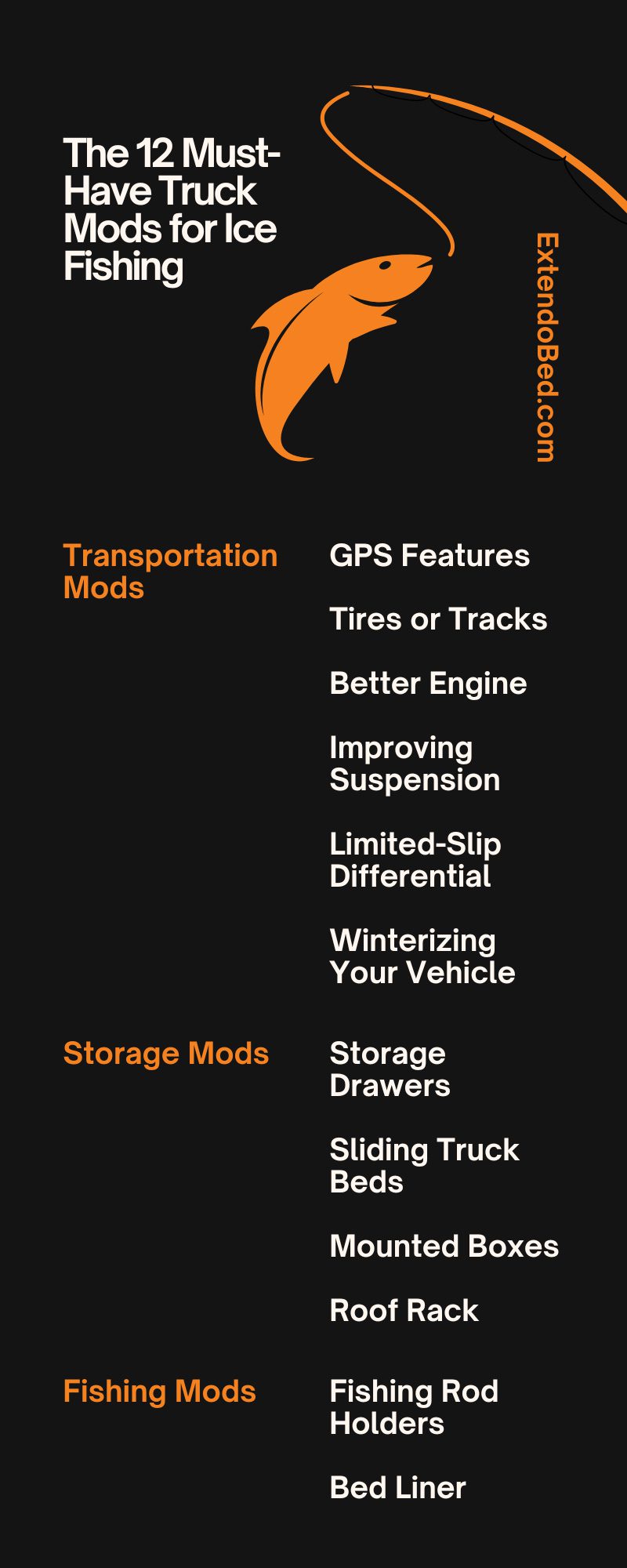
The 12 Must-Have Truck Mods for Ice FishingIce fishing is plenty of fun, as you can enjoy some of the most peaceful times of the year out on the water. But it requires much forethought and preparation to go on a successful trip. One of the major tools you’ll need is a vehicle capable of handling the cold and helping you when fishing. Here’s a look at some truck modifications that’ll make it easy to enjoy an ice fishing trip.

Transportation Mods

The first thing you’ll need to do is ensure your car can handle the transportation to and from the fishing location. Traveling to an ice fishing location has a few more hurdles than taking a summer trip, so your vehicle needs to handle that. Specifically, you should add some driving mods that help you get to your location safely despite the cold weather.

GPS Features

The first feature you should add to your vehicle is a form of navigation. Getting lost can be very dangerous when traveling in winter, so you need something to ensure proper navigation. The best tool for this is a good GPS you can install in your vehicle or bring with you as you travel.

Tires or Tracks

Driving in the cold or on the ice is much different than normal drives on the road. The cold affects friction and can make your vehicle slower than usual, endangering you and others. Switching your tires out for specialty ice tires or changing to tracks instead of tires can make it easy to drive in the cold or on ice.

Better Engine

Your engine influences your vehicle’s ability to drive, and you don’t want it to break down in the cold. At the very least, make sure your engine can handle being in the cold for hours, and replace it with a better engine if it can’t handle the cold.

Improving Suspension

One of the most difficult parts of driving in the cold is getting traction on the road and ice. Better suspension can help with traction and improve your vehicle’s control. Look for better suspension before taking to the road for a smoother ride and better tire-to-ground friction.

Limited-Slip Differential

A limited-slip differential is a unique modification you can make to your wheels to help with turns. Normally, the outside wheel of a turn must travel further and faster to keep up. This can cause problems when the ground is slippery and you have low traction. A limited-slip differential is a mod that helps offset these issues and makes it safer to drive when it’s cold.

Storage Mods

Storage is a major issue when it comes to ice fishing trips. It can be difficult to bring all your gear even when going on a normal warm fishing trip; you need to bring even more when going on an ice trip. That’s why storage modifications can be so helpful for these trips. Here are a few good storage mods any truck can utilize for ice fishing.

Storage Drawers

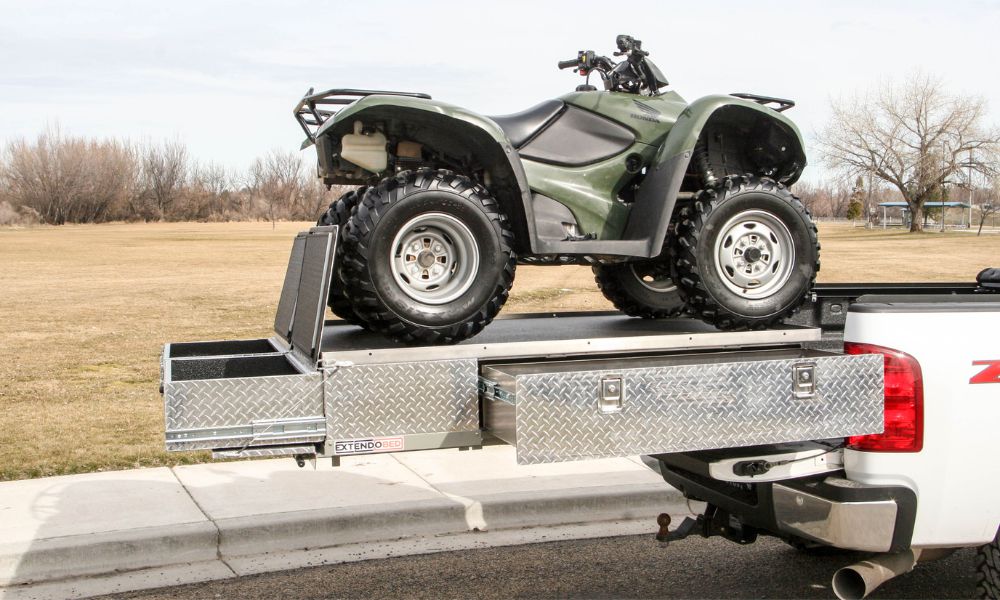
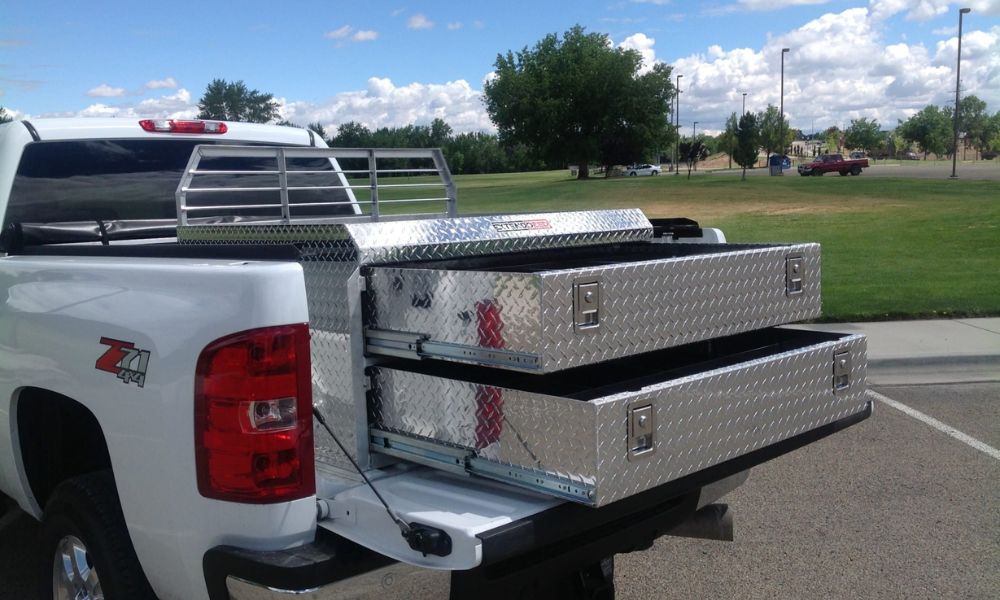
One of the most common additions people add to their vehicles is a set of storage drawers, which make it easy to store items in designated places. You can efficiently utilize more space in the vehicle because of these drawers. You can also install these on the outside of your vehicle for extra storage space.

Sliding Truck Beds

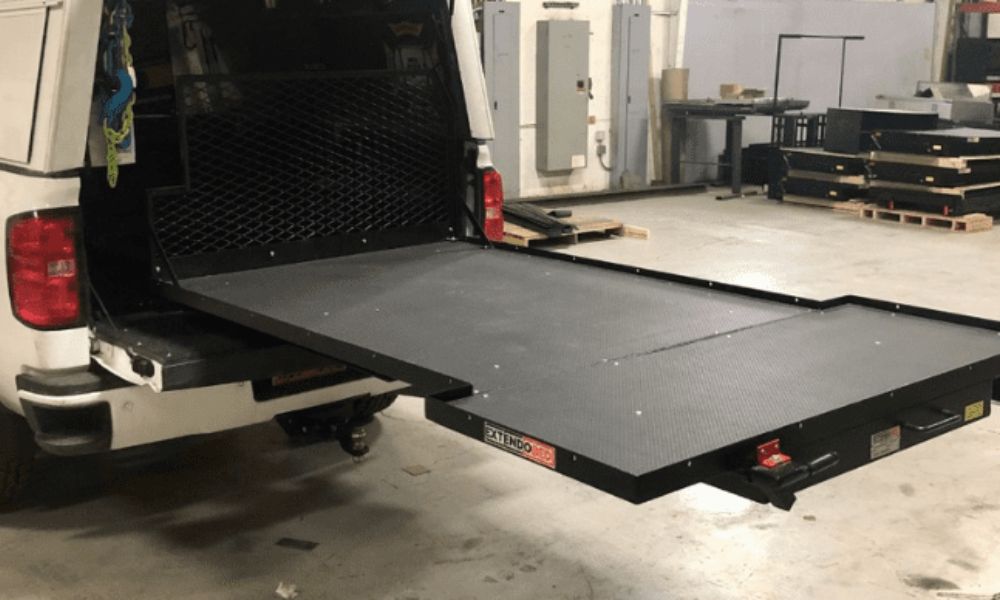
Maximizing space in your truck is difficult as you need to store everything while keeping it accessible. That’s why sliding truck beds are so helpful—you can fully utilize the space while accessing whatever gear you put in easily. It’s simple to install a large aluminum storage trunk with all the compartments you need for your gear and custom built-in drawers.

Mounted Boxes

Some of your gear is delicate, and you want to keep pieces separate so they don’t break when you drive. That’s where mounted boxes come in handy—they protect the contents inside and won’t shift around your truck. Additionally, you’ll increase your organization since you can dedicate the box to store specific equipment.

Roof Rack

Roof racks are a great way to increase your storage capacity and are especially handy for transporting large objects. If you can get a roof rack on top of your vehicle, you can easily store large items like canoes or kayaks on your roof without using up other storage room.

Fishing Mods

When it comes to essential ice fishing modifications for trucks, you aren’t limited to modifications that purely provide utility. Many modifications make ice fishing easier and solve common issues. Here’s a look at a few of the mods that may make it easier to fish when it’s freezing out.

Fishing Rod Holders

Fishing rods aren’t made to withstand direct contact with ice and cold, especially when wet. The rods will get cold, and some may become brittle, so avoiding contact with ice and snow can be a big deal. Installing simple rod holders to your vehicle can make it easy to store your rods when you’re not using them, and you won’t have to put them on the ground.

Bed Liner

A bed liner can serve several purposes during the icy season, which is why it’s a good investment. It’ll help you keep your truck bed clean from anything you catch and protect your bed from damage. Additionally, you can use it as a comfortable place to sit because the liner adds some cushioning.

Winterizing Your Vehicle

While this isn’t necessarily a mod, you must winterize your vehicle before going on an ice fishing trip. The mods will help with that, but there are other important steps, such as switching out your liquids for cold-resistant options and topping them off. Routine maintenance is also important for the continued function of your vehicle in the colder months, so bring it to a mechanic regularly and before every trip if possible.

Next time you want to go on an ice fishing trip, add these mods to your vehicle. This way, you can avoid many common problems, and you’ll have a much better time for it. Whether you’re traveling for just a day or going with friends for a long time, these changes can make the whole trip more enjoyable and safer for everyone.The 12 Must-Have Truck Mods for Ice Fishing

Sticky

Why a Stationary Storage Box Might Be a Better Option

January 18, 2023

Why a Stationary Storage Box Might Be a Better Option

Why a Stationary Storage Box Might Be a Better Option

When it comes to storage, few vehicles are as useful as a truck or a van. That doesn’t mean you can’t improve the space in these vehicles with a good storage solution modification. While there are many cool options for storage mods, sometimes the best option may be a stationary storage box, and here’s why.

Consistent Organization

A stationary storage box doesn’t move from its spot and will always have the same space, which means you can rely on it for consistency. This is important for the gear you need to access quickly and frequently, as you always know where it is and how to retrieve it.

Specialty Boxes

One of the best benefits of these truck storage organizers is the ability to store specific gear in special boxes that perfectly fit the equipment. This is extremely useful for delicate gear that can’t shift while driving for fear of breaking or damage. A stationary storage box is also great at improving your organization by keeping things from moving around.

More Protection for Gear

Stationary boxes offer a lot of protection for your gear, as they hold everything in place and take the hit from anything falling on the boxes. Additionally, you can get locks on your stationary boxes to stop unauthorized access to whatever you store within, which is important for stopping theft.

Fits With Other Options

While stationary storage boxes may be the best option for your storage, they don’t need to be the only option. You can get these stationary boxes in your van or truck while investing in other storage modifications. This way, you can benefit from these boxes while using other modifications that may best fit your needs.

It’s impossible to say which storage modification is the best, as they all fulfill their own separate roles, but that’s why a stationary box can be such a great option for your vehicle. As they fulfill their purpose better than any other option out there, you’ll never find another option that fits all the same needs.

Sticky

5 Tips for Installing Your New Truck Bed Slide

December 28, 2022

5 Tips for Installing Your New Truck Bed Slide

5 Tips for Installing Your New Truck Bed Slide

Installing a truck bed slide can be a difficult task if you aren’t familiar with the process. Since every bed is unique to the make and model of the vehicle, you can’t just memorize the steps. Instead, you can learn these universal tips that make installing a truck bed slide easier.

Clean Your Space

Your truck bed should be clear of any items before you start installing so they don’t get in the way. Additionally, you should wipe clean the bed to prevent dirt and grime from dirtying the slide and complicating the installation.

Follow the Manufacturer’s Instructions

The best thing you can do when installing your bed slide is to follow the manufacturer’s instructions. As the creator and developer of your bed slide, they’ll know the best method to install the tray without causing issues.

Be Careful of the Vehicle’s Internal Systems

Every vehicle has internal systems and vulnerable parts that you can damage during installation. Before you drill through any part of your vehicle, ensure you’re not damaging these systems, like the fuel line or wires.

Leave Some Room

Since you’ll need to tighten the nuts and bolts when installing your truck bed slide-out platform, you’ll need to leave enough room on both sides to get a wrench in. Before you anchor anything down, make sure you have the space to get your tools in so you can complete the job.

Professional Installation

While you can install a truck bed slide yourself, it’s sometimes easier to leave it to a professional. One of the best tips for installing a bed slide is to hire a professional who works with vehicles for a living and has experience installing different car parts.

These tips should help you install your bed slides so you can benefit from all the space organization and utility these modifications provide. A good bed slide will provide storage space and speed up loading and offloading items.

Sticky